Introduction
Are you prepared to obtain your Canada student visa from India in 2026 with professional assistance from a Canada student visa consultant in Ahmedabad? The comprehensive guide for Indian students examines the most recent IRCC regulations together with PAL letters, proof of funds, and DLI selection and 74% refusal reasons to help students improve their chances of approval while avoiding delays and starting their international study programs with confidence.
Canada imposes strict requirements for study permit applications because it seeks students who can prove their financial ability to cover their first academic year while studying and complying with regulations and returning home or transitioning to authorized pathways. The step-by-step plan becomes essential because it helps you avoid missing documents at the last moment while assisting you in presenting your study plan in a clear manner during your application process.
Step 1: Choose a DLI program and secure your LOA
You need to begin your process by selecting your study program together with your educational institution, which must be approved as a Designated Learning Institution by the IRCC. You must prepare the Letter of Acceptance (LOA) in a clean PDF format because it will be needed for your study permit document checklist. For hands-on help with the LOA, PAL and checklist, see our Canada student visa consultant in Ahmedabad, Vadodara, Surat and Rajkot page.
Step 2: Arrange your PAL (if needed)
A Provincial Attestation Letter (PAL) has become a key requirement for many students applying for a study permit from outside Canada starting January 22, 2024. Your school/college usually guides you on how the PAL is issued (rules differ by province), so you should check this information early because many students waste time asking about it after they receive their LOA.
Step 3: Prepare your documents (the real approval key)
The IRCC will generate a custom document checklist for you after you complete the online questionnaire. You need to prepare the documents that the system requires, instead of making assumptions about the required documents. You need to prepare identity documents together with an LOA, proof of funds, and your program selection explanation, which shows how the program matches your career goals. You must respond to IRCC for medical and additional document requests by providing the exact items they need in the specified document formats.
Step 4: Apply online through an IRCC Secure Account
Most students apply online, and IRCC provides clear guidance that applicants must first read the instruction guide because it explains all application fields before they start completing their forms. You will create your own checklist through your answers, and then you will submit your documents through your account by uploading them. Important note for Indian students: if you still hear people talk about SDS, remember that SDS is closed, so you should plan your application with the standard study permit process timeline and documentation.
Step 5: Pay fees, submit biometrics, and track updates
The online application process will request your biometrics, which include fingerprints and a photo, after you submit your application. You must visit a biometrics collection site to provide your biometrics after you receive your biometrics instruction letter. The standard application process for study permits requires applicants to pay fees and submit their applications through their personal accounts according to IRCC regulations. You should protect your login information because IRCC will send you important messages and document requests through your account.
Step 6: Get your approval letter and travel to Canada
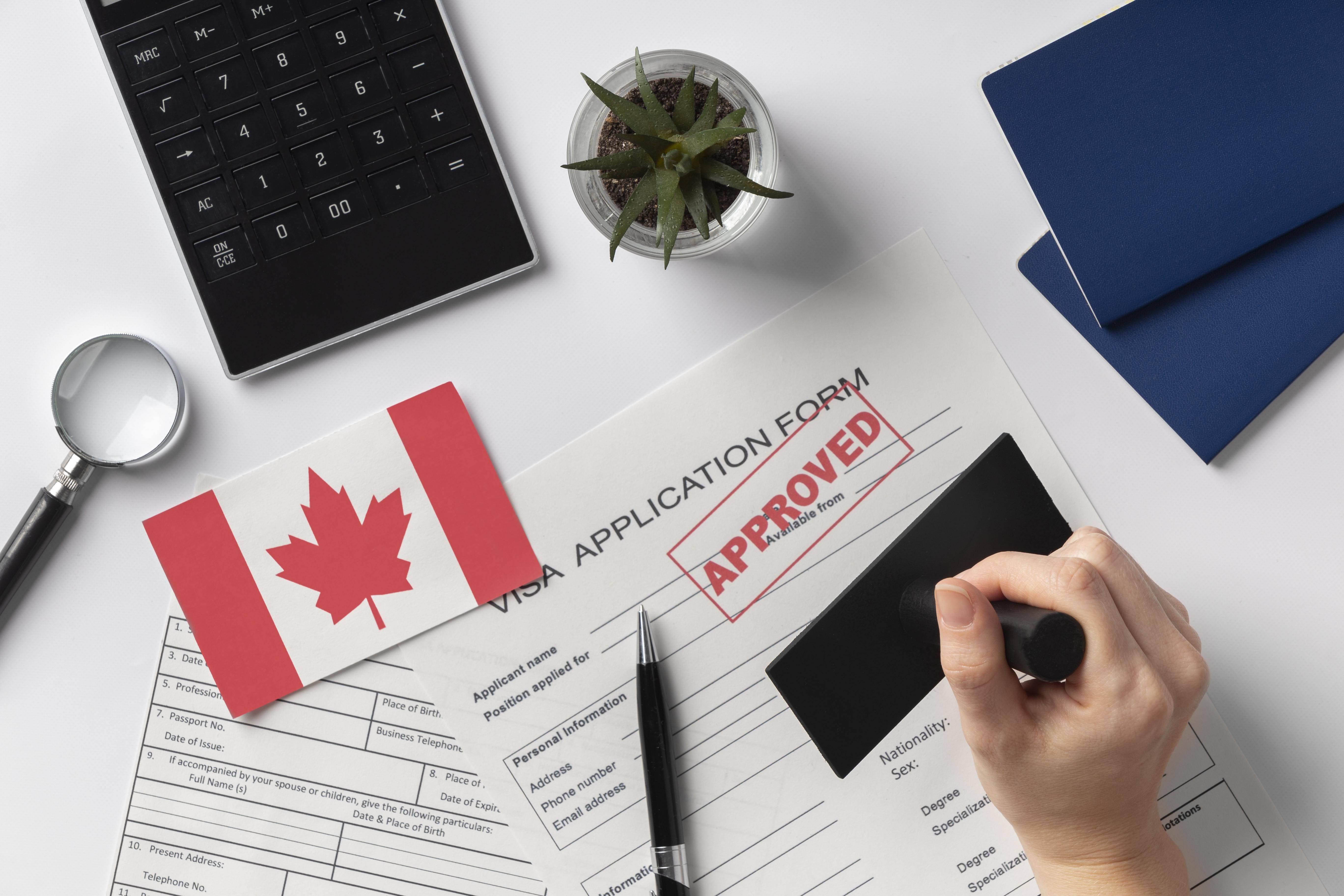
The Canadian government issues a study permit approval letter, which serves as a travel document for you to enter Canada when your study permit application gets approved. The Canada Border Services Officer will give you your study permit at the airport or border after they verify your documents.
Common mistakes Indian students should avoid
These problems require serious attention because they frequently lead to process delays and application denials.
- Rushing the application without reading the instruction guide, missing fields, or uploading the wrong file.
- Many applicants require the PAL step for their study permit application, but applicants tend to ignore this requirement until they reach the final stage.
- You did not check your IRCC account messages, which caused you to miss the timeline for your biometrics request.
Do you need a consultant? (Including support in Ahmedabad)
Some students apply by their own smoothly, especially if their documents are clear, and they can follow the IRCC guide step by step. Families prefer to work with a Canada student visa consultant from Ahmedabad who provides support for course shortlisting, document organization, and assessment explanation because they need help to maintain their application schedule while avoiding minor errors that lead to major delays.
Conclusion
You can now apply for a Canada student visa from India. This guide provides complete IRCC procedures together with PAL regulations and proof of funds requirements that exceed CAD 20,635, and advice to overcome the 74% refusal rate. The application process requires you to begin your work early while obtaining your LOA and creating personalized SOPs that connect to your Indian background to avoid common application mistakes, which include submitting fake documents and missing application deadlines. The student visa consultant in Ahmedabad achieves a 90% success rate by handling DLI selection andvisa application schedule management. You can pursue your study abroad goals in Toronto or Vancouver.
Frequently Asked Questions (FAQs)
-
What is a study permit, and do I need one from India?
A study permit allows study at a DLI for programs over 6 months. Indian students need to complete their application process before traveling to Canada -
Do I need a Provincial Attestation Letter (PAL)?
Yes, most new applicants need a PAL from your DLI since 2024 (exemptions for extensions or PhDs). -
What documents do I need for my application?
The required documents include a passport, an LOA, a PAL, funds proof (CAD 20,635+tuition), a study plan, a police certificate, and sponsor affidavits. -
How much bank balance is required?
The living costs of CAD 20,635, together with first-year tuition, can be covered through bank, GIC, or loan payments after 2024 without any SDS minimum requirements.
Applying from Ahmedabad, Vadodara, Surat or Rajkot? Our guide to the Canada study visa from Gujarat covers the local VFS biometrics appointment and a realistic timeline.