

Introduction:
Students willing to study or settle abroad have to take an English proficiency test, out of which IELTS has long-standing popularity. In IELTS, Listening is the easiest skill to score the maximum, to the extent that students have achieved 9 bands, but this requires a lot of practice. This blog will shed light on the most challenging part of IELTS Listening, specifically Multiple Choice questions. You will get to know various types of questions along with the tips to solve IELTS Listening Multiple Choice Questions, and typical errors committed by students while solving the same.
Types of Multiple Choice Questions in IELTS Listening
Multiple choice questions come in varied forms and should be dealt with sharpness. The different types of multiple-choice questions are:
-
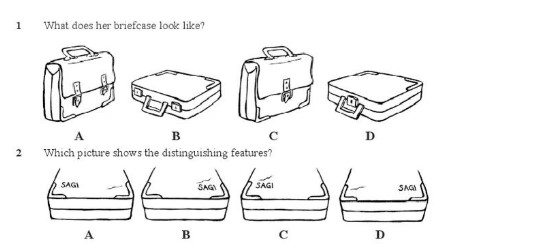
Pictorial MCQs: Here, you will be asked to select the answer based on the description given in the audio.
-
Sentence Completion MCQs: An incomplete sentence will be mentioned in the question, and you should go for the best answer possible.

-
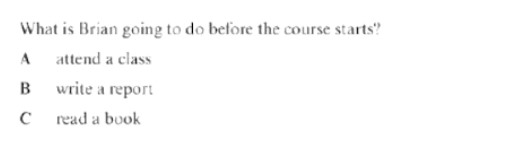
Short Answers MCQs: You need to choose the answers from 3-4 options. Usually, the options will be of 2-3 words.
-
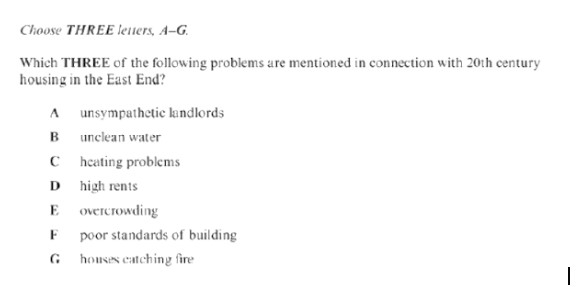
Multiple Choice Multiple Answers – List format: In this MCQ type, you are presented with a list of options out of which you are supposed to pick the number of answers as instructed in the question.
Top 9 tips to ace IELTS Listening Multiple Choice Questions
Simply follow these top 9 tips to answer the multiple choice question a smooth sailing.
- Read the question : You will have a short time to prepare before the speaker or speakers begin talking. First, read the question very carefully to ensure that you know exactly what you have to do.Particularly note the type of question – single with 3 options or list selection with 2 or more answers to identify.
- Look for a title Not every question will have a title but if there is one, it will tell you the context of the question. This will help you to understand the answers listed and give you a big clue as to what sort of information will be contained in the recording.
- Underline the key word in the question Underline or highlight the key word in the question. Synonyms and paraphrasing will be used extensively, so think of some words that might be used instead, including negatives for things you should not take.
- Predict the answer Look at the list of answers. You may be able to predict which ones are correct or at least one or two of them, and a couple that are probably wrong.
-
Think of synonyms :
Expect to hear all the answer options in the recording, not just the correct answers. Synonyms will definitely be used for some of the words, so scan the list and see if you can quickly think of any synonyms or related words.
Also, be aware that the answers will not be in the same order as you’ll hear them in the recording. - Identify the difference In single questions with a choice of 3 or 4 answers, the answers may be similar in some way to try and catch you out. If this is the case, underline any key words that will help you to work out the difference in meaning between them.
- Watch out for distractors We already know that all the answers in the list will probably be included in the text, so you need to listen carefully to identify the correct ones. Particularly listen out for distractors as the examiners love to try and trick you into picking the wrong answers.
- Writing the answer In IELTS Listening multiple choice questions, your answer will almost always be the letter of the answer, not the words. This will be stated in the instructions.
- Guess if necessary Never leave a blank space on the answer sheet. If you miss an answer, take an educated guess. This gives you at least some chance of getting it right. Don’t stress about a missed answer as it will affect your ability to answer the next set of questions. Just make your choice and move on.
Common mistakes to avoid
While solving multiple choice questions of IELTS Listening, students, unintentionally, commit errors which lead to a lower band score. Ignore these faults and solve MCQs as a pro.
- Selecting the answer immediately after the speaker starts speaking : The answer should be selected based on the demand of the question and not on the chronology of the speech. Let the speaker finish talking about the particular question and then go for selecting the answer for it. Do not hurry. Wait the speaker to complete.
- Failing to spot the difference : You may find all the options the same, but there will be a minor variation that you need to keep an eye on. Keywords can help you make out the dissimilarity among options.
-
Expecting the speaker to spell the exact word or sentence as mentioned in the question::
One of the biggest inaccuracies is to expect the speaker to speak the same words as written in the question. This won’t happen. Always think of similar words or paraphrases of the statements. -
Not utilizing the time to read the questions when told to do so:
During the audio, you are given the time to read the questions. Not utilizing it will lead to confusion and frustration. -
Ignoring the guesswork:
There is no negative marking for choosing the wrong answer, yet some students leave the questions empty. At least prefer to choose an answer that you feel can satisfy the demand of the question. -
Listening to every word :
It is the commonest mistake made by students to listen to every word, even if unimportant. This leads to distraction and you may end up missing out on answering all the other questions of that section.
Conclusion
IELTS Listening can be improved by practicing regularly and this can be done by listening to audio scripts, podcasts, audio books and watching web series. Make yourself familiar with myriad accents. Stop performing the above-mentioned flaws and level up your score by using the top tips for solving multiple-choice questions in IELTS Listening.
Multiple choice questions are where distractors do the most damage, as our guide to IELTS Listening distractors explains.