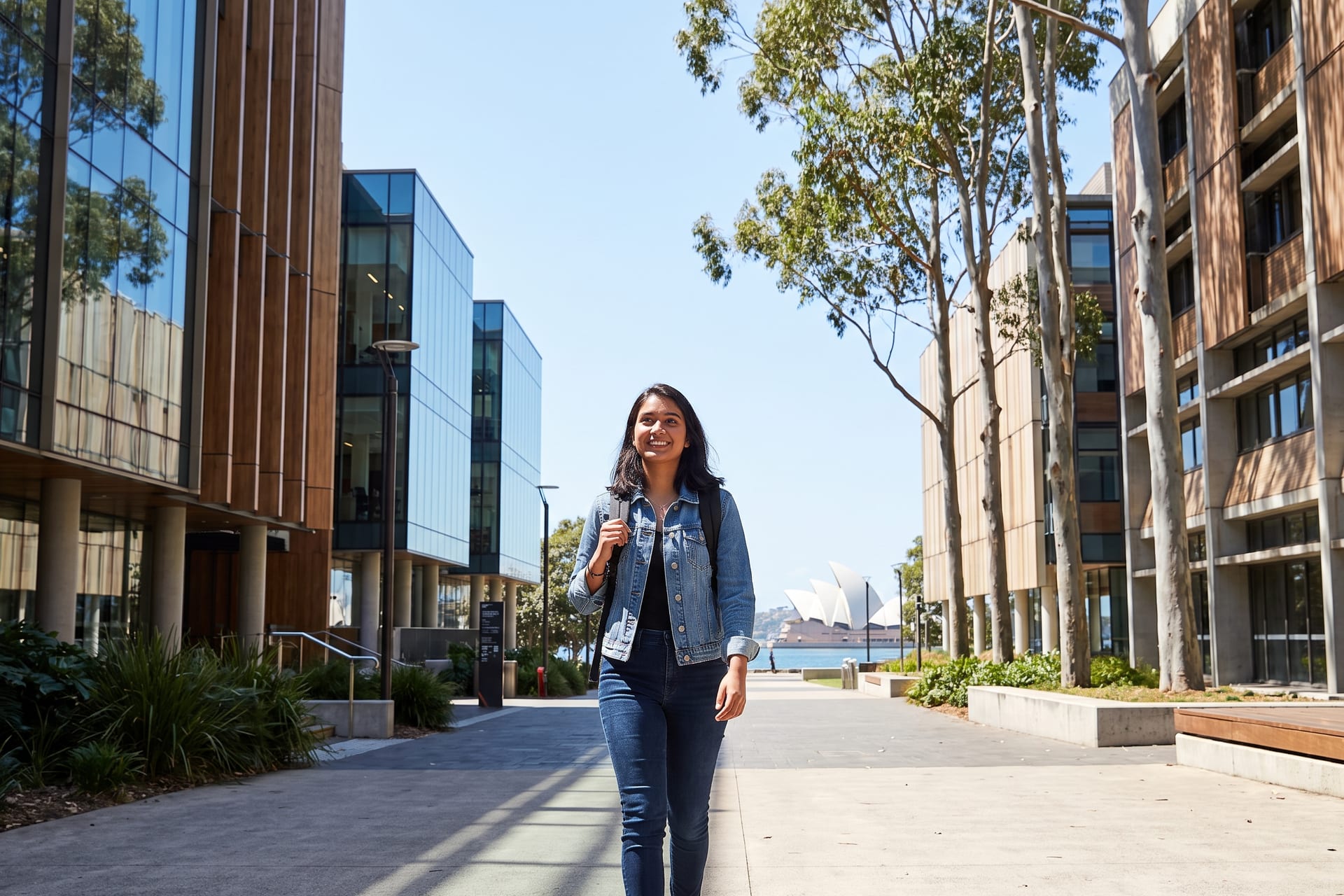

The Australia study visa process for Indian students in 2026 is managed by the Australian Department of Home Affairs under the Student Visa (subclass 500). Australia is home to some of the world's top universities and offers Indian students exceptional academic quality, a safe environment, strong employment outcomes, and one of the most generous post-study work visa programmes globally. Understanding the study visa application process clearly — from eligibility to approval — is essential to ensure your application is successful.
This step-by-step guide covers every stage of the Australia student visa process, including required documents, fees, timeline, GTE requirements, and what to do after you arrive.
What Is the Australia Student Visa (Subclass 500)?
The Student visa (subclass 500) allows international students to study full-time in Australia at a Registered Training Organisation (RTO), university, school, or English language centre. The visa covers the duration of your course, typically with an additional grace period after your course end date. It allows you to work up to 48 hours per fortnight during your study period.
There is no annual cap on Student 500 visas — Australia does not limit the number of student visas issued — which means your application is assessed on individual merit, not quota.
Australia Study Visa Eligibility Requirements for Indian Students
1. Confirmation of Enrolment (CoE)
You must have received and accepted an offer from a registered Australian education provider and received a Confirmation of Enrolment (CoE). The CoE contains your course details, start date, tuition fees, and provider information. You cannot apply for a student visa without a CoE.
2. Genuine Temporary Entrant (GTE) Requirement
This is the most critical and often misunderstood part of the Australia student visa process. The GTE requirement asks you to demonstrate that you genuinely intend to stay in Australia temporarily for education purposes and will return to India after your studies. The visa officer assesses your GTE based on:
• Your ties to India (family, property, job prospects)
• Your academic background and the logic of your course choice
• Your immigration history and previous visa compliance
• Your personal circumstances
A weak GTE statement is the most common reason for Australian student visa refusals. A strong GTE statement clearly explains why you chose this specific course, why you chose Australia, and what your plans are after returning to India.
3. Financial Capacity
You must demonstrate that you have sufficient funds to cover:
• Tuition fees for the first year (or full course if shorter)
• AUD 21,041 per year for living costs (as per DIBP minimum requirements)
• AUD 7,362 per year for a partner/spouse (if accompanying you)
• AUD 3,152 per year for each child (if accompanying you)
• Return airfare cost
4. English Language Proficiency
Most Australian universities require IELTS Academic 6.0–6.5 overall or equivalent PTE Academic 50–58. The Department of Home Affairs also has its own English language requirements for the visa. Ensure your test score meets both the university's and the visa authority's requirements. Global Colliance provides IELTS and PTE coaching to help you reach the required score.
5. Overseas Student Health Cover (OSHC)
OSHC is mandatory for all international students in Australia and must be purchased before applying for the visa. It provides health insurance coverage during your stay. You must hold OSHC for the entire duration of your student visa. Some universities include OSHC in their fees; others require you to purchase it independently.
6. Health and Character Requirements
You must meet Australian health and character requirements. Most applicants are required to undergo a medical examination at an IRCC-approved panel physician. Character requirements involve declaring any criminal convictions or adverse immigration history.
Step-by-Step Australia Study Visa Application Process
Step 1: Receive Your Offer Letter and CoE
Apply to your chosen Australian university and receive your offer letter. Accept the offer and pay the deposit. Once done, your institution will issue your CoE.
Step 2: Purchase OSHC
Purchase Overseas Student Health Cover (OSHC) from a registered insurer such as Bupa, Medibank, CBHS, or AHM. You need the OSHC policy number for your visa application.
Step 3: Create an ImmiAccount
All Australian visa applications are submitted online through ImmiAccount on the Department of Home Affairs website. Create a free account and begin your online application for a Student Visa (subclass 500).
Step 4: Complete the Online Application
Fill in the Application for a student visa (Form 157A). The form covers personal details, passport information, CoE details, financial information, and your GTE statement. Attach all required documents.
Step 5: Pay the Visa Application Fee
The Australia student visa fee has been significantly increased in recent years. As of 1 July 2025, the Student visa (subclass 500) application fee is AUD 2,000 per primary applicant (approximately INR 1,07,000). From 1 July 2026, this increases further to AUD 2,500. These fees are non-refundable and are paid online during the application. Additional fees apply for a partner (AUD 2,000) and dependent children under 18 (AUD 500 each).
Step 6: Biometrics and Medical
The Department of Home Affairs will contact you if biometrics or a medical examination is required. Medical examinations are conducted at approved centres in India including those in Ahmedabad, Mumbai, Delhi, Chennai, and Hyderabad.
Step 7: Wait for a Decision
Processing times for Australian student visas vary. In 2026, 75% of applications are processed within 29 days, and 90% within 42 days. You can track your application status through your ImmiAccount.
Step 8: Grant and Travel
If your visa is granted, you will receive an electronic visa grant letter. There is no stamp in your passport — the visa is linked electronically to your passport number. You can travel to Australia any time before the visa allows date.
Australia Post-Study Work Visa (Subclass 485)
After completing your degree in Australia, you are eligible to apply for the Temporary Graduate Visa (subclass 485) under the Post-Study Work stream:
• Bachelor's or master's by coursework: 2 to 4 years (varies by location and course)
• Master's by research or doctorate: 4 to 5 years
• Students who studied in regional Australia: Additional 1–2 years
This visa allows you to work full-time in any occupation and provides a pathway toward permanent residency through skilled migration.
How Global Colliance Supports Your Australia Visa Application
Global Colliance's Australia study visa consultants have guided hundreds of Indian students through the subclass 500 application process. Our team helps with university selection, CoE follow-up, GTE statement writing, financial document preparation, OSHC registration, and ImmiAccount assistance.
Connect with our expert team through our Surat office or Ahmedabad office for a personalised consultation.
External Resource
For official Australia student visa information and to start your application, visit the Australian Department of Home Affairs Student Visa page.
Conclusion
The Australia study visa process is thorough but manageable when you understand each step. The Genuine Temporary Entrant requirement deserves the most attention — a weak GTE is the primary cause of refusals. Start your preparation early, secure your CoE and OSHC, write a compelling GTE statement, and work with an experienced consultant to maximise your chances of approval.
Applying from Ahmedabad, Vadodara, Surat or Rajkot? Our guide to the Australia student visa from Gujarat covers biometrics requests and booking the health check early.