- Downloads
- Careers
- Testimonials
- IELTS Coaching Ahmedabad
- IELTS Coaching Vadodara
- Best Study Abroad Consultant
- Success Stories ▾
- Events


Study in Europe
Embarking on a higher education journey abroad is an exciting prospect for students after completing their 12th grade. Europe has become one of the most popular study destinations in the world, home to over 5,000 higher education institutions across countries like Germany, France, the Netherlands, Ireland, Italy, Spain, Poland, and Sweden. Choosing among the many countries and programs available can be challenging, but Global Colliance, a trusted study in Europe consultant in Ahmedabad, Vadodara, Surat, and Rajkot, streamlines the entire process, offering detailed guidance to make your application smooth and straightforward. Europe is renowned for its world-class universities, tuition-free or low-cost public education in countries like Germany, and a Schengen visa area that lets you travel freely across 29 European countries while you study. The continent is also celebrated for its cultural diversity, safety, and strong social welfare systems. Additionally, Europe's growing job market and generous post-study work permits — from Germany's 18-month job-seeker visa to France and the Netherlands' one-year Orientation Year — make it an attractive option for international students seeking academic and professional growth. So, whether you are planning to study after 12th grade or pursuing advanced courses, Europe's exceptional educational environment and balanced lifestyle make it a top choice. Discover the incredible possibilities that studying in Europe can offer with support from a leading study in Europe consultant in Ahmedabad, Vadodara, Surat, Delhi and Rajkot.
Why Should Students Choose Europe?
Europe has emerged as a top choice among Indian international students in recent years due to several compelling factors: tuition-free or low-cost public education, a Schengen visa that unlocks travel across 29 countries, and consistently high rankings for quality of life and safety. Language requirements vary by destination and program — many English-taught courses in Germany, the Netherlands, and Sweden ask for an IELTS band of 6.0 to 6.5, while country-specific programs may require proficiency in German, French, or Italian instead. To help students meet these requirements, our expert and certified faculties provide strategies along with focused training to strengthen their scores and their chances of admission.
Europe is home to some of the world's most highly ranked universities, with Germany and France alone placing several institutions in the QS World Top 100. Technical University of Munich, Sorbonne University, Sciences Po, and TU Delft offer a wide range of programs across multiple disciplines. European universities emphasise research, practical training, and important life skills such as teamwork, effective communication, critical thinking, and leadership qualities.
One of Europe's biggest draws is its low-cost or tuition-free public education. Germany, Norway, and Czechia charge little to no tuition at public universities, while France, Italy, Spain, and Poland remain significantly more affordable than the UK, USA, or Australia. This makes a world-class European degree accessible without the heavy financial burden common elsewhere.
A single national student visa for most Schengen-area countries lets you travel freely across 29 European countries while you study — explore Paris one weekend and Amsterdam the next, all without applying for separate visas. This unmatched mobility is unique to studying in Europe.
After completing your studies, most European countries offer generous post-study work permits — Germany's 18-month job-seeker visa, France and the Netherlands' one-year Orientation Year, and Sweden's 12-month post-graduation permit. These pathways allow you to gain valuable work experience and build a career in Europe.
European nations consistently rank among the safest and most politically stable countries in the world. The continent takes pride in its cultural diversity, with communities from across the globe celebrating a wide range of traditions and festivals, helping international students feel at home even when far from home.
Most European Master's programs take just one to two years to complete, compared to longer programs elsewhere — reducing both tuition and living costs. Many courses, especially in Germany and the Netherlands, are designed in close partnership with industry, keeping curricula practical and job-ready.
From the EU's landmark Green Deal funding driving renewable energy jobs to leading research in engineering, AI, and biotechnology, Europe offers a platform where intellectual curiosity can truly flourish. Students gain hands-on exposure to some of the world's most advanced laboratories and research institutions.
A degree, diploma, or certificate from a European university is widely recognised and valued as equivalent to those from esteemed institutions in other developed countries. The skills and knowledge you gain from a European university will serve you well, whether you choose to work in Europe, India, or any other country.
The Education System in Europe
Europe hosts over 5,000 higher education institutions across its many countries. While the exact structure varies by nation, the three main types of educational institutions students can choose from are:
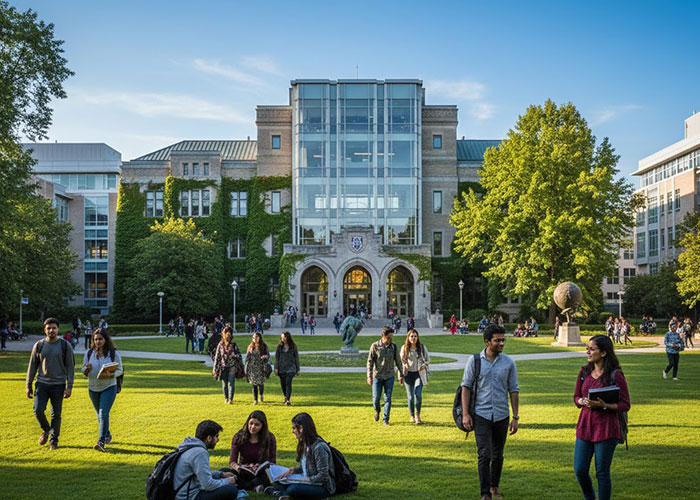
Public Universities
Public universities across Europe offer a wide range of programs, including Bachelor's, Master's, and PhD degrees. They emphasize research and academic depth, and in countries like Germany, Norway, and Czechia, charge little to no tuition fees for international students.
Most European countries also have a small number of private universities offering higher tuition but often smaller class sizes and specialised programs.
Some top European universities preferred by Indian students include Technical University of Munich, Sorbonne University, University of Amsterdam, Trinity College Dublin, and KTH Royal Institute of Technology.
Universities of Applied Sciences
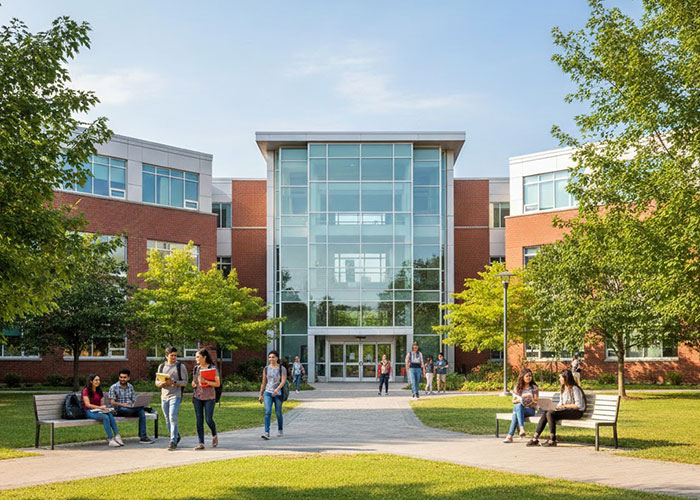
Universities of Applied Sciences (known as Fachhochschulen in Germany, Hogescholen in the Netherlands) focus on practical, industry-linked training that prepares students for specific careers in fields such as engineering, business, and technology. Programs are more budget-friendly than research universities and are designed to make graduates job-ready.
Some of the best applied science institutions for Indian students include Munich University of Applied Sciences, The Hague University of Applied Sciences, and Dublin Institute of Technology.
Specialised Institutes
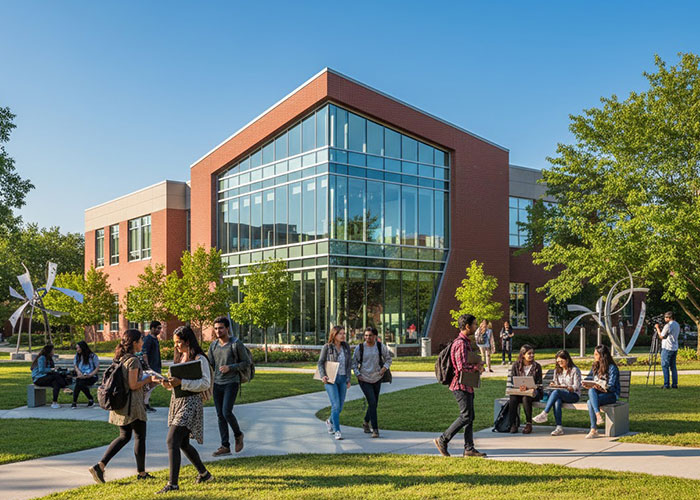
Specialised institutes across Europe focus on specific areas such as art, design, fashion, film, or music, offering unique programs tailored to particular industries or creative fields with a strong emphasis on hands-on skills and training.
Many specialised institutions across Europe are popular among international students, including Politecnico di Milano's design school, ESMOD Paris for fashion, and the Bauhaus-Universität Weimar for art and design.
Intakes in Europe
Europe offers three main intakes for international students: Fall, Winter (also called Spring at some universities), and Summer. These intakes may also be referred to as semesters. The specific intake available to you depends on the country, program, and university you are applying to — for example, German universities typically have an application deadline around mid-July for their Winter semester, while Dutch universities close non-EU applications around mid-December.
Here is an overview of the intakes available for international students in Europe:
Winter Intake


01

01

02
02

03
03
02
Winter Intake
Documents Required for Admission into Colleges and Universities
During the application process for an undergraduate or postgraduate program in Europe, certain documents are necessary to complete the procedure. Requirements vary by country and university, but it is important to have the following documents prepared for admission. Note that these are only primary documents; universities and consulates may require additional documents.
Passport Bio Pages
Official Academic Transcripts, Previous Records, and Other Merit Certificates
Test Score Documents (e.g., IELTS, PTE, TOEFL)
Letter(s) of Recommendation (LORs)
Work Experience Certificate (if applicable)
Updated Resume
Statement of Purpose (SOP)
WES Evaluation (if required)
Student Visa Requirements for Europe
There is no single “Europe student visa” — since Europe is a continent of many independent countries, each destination issues its own visa. However, most non-EU students fall into one of two tracks under the Schengen framework: a Schengen short-stay (Type C) visa for programs or exchanges under 90 days, or a national long-stay (Type D) visa for full degree programs over 90 days at a single country's institution — usually followed by a local residence-permit registration after arrival. The national visa typically allows students to travel freely across the other 28 Schengen-area countries during their studies.
Students applying for a European study visa do not necessarily need an IELTS score — many English-taught programs also accept TOEFL or PTE, while country-specific programs may require German, French, Italian, or Spanish proficiency instead. The specific language test requirements vary depending on the country, institution, and program of study, so it's advisable to check the requirements of your chosen destination. For students planning to study in Europe, staying informed about exam dates and visa requirements for your specific destination country is crucial. Global Colliance assists with meeting your study in Europe visa requirements and ensures you are prepared for your journey, whichever European country you choose.
Whichever European country you choose, most national student visa applications share a similar core documentation checklist, allowing you to experience Europe's world-class education system with confidence. The main documentation requirements are:
Language Proficiency
To demonstrate your language skills for academic purposes at a European institution, you will need to meet certain requirements. Generally, a minimum IELTS score of 6.0 to 6.5, or an equivalent TOEFL or PTE score, is required for English-taught programs. Some country-specific programs may instead require a certified German, French, Italian, or Spanish language test. This shows your ability to succeed academically at your chosen European institution.
Financial Preparation
Planning your finances is crucial when studying abroad. To demonstrate your commitment and responsibility, you need to provide proof of full tuition payment (where applicable) with your application. Additionally, you must show preparedness by providing proof of sufficient funds for living expenses — commonly managed through a blocked account (such as Germany's Sperrkonto) or an equivalent bank guarantee, depending on your destination country.
Letter of Acceptance
Be sure to include the official letter of acceptance from your chosen European university to demonstrate your commitment to your chosen educational path.
Medical Certificate
Prioritize your health by arranging valid travel and health insurance coverage — mandatory from day one in most European countries — and completing any required medical examination. This ensures you are physically prepared for your exciting journey.
Here is the list of the supporting documents required for a Europe student visa:
Passport Bio Pages
Provide copies of the pages containing your personal information and travel history.
Provisional/Degree Certificate
Include your provisional or degree certificate to demonstrate your academic achievements.
Backlog Summary
If you have encountered any backlog in your studies, provide a summary to display a comprehensive picture of your educational background.
Letters of Recommendation
Provide three letters of recommendation highlighting your academic and personal qualities that demonstrate your potential to succeed.
Transcripts
Submit your official transcripts which provide a detailed record of your academic performance.
Statement of Purpose
Craft a compelling statement of purpose that outlines your aspirations, motivations, and how studying in Europe aligns with your future goals.
Work Experience Letter with Last 3 Months' Pay Slips (if applicable)
If you have relevant work experience, include a letter from your employer along with recent pay slips to showcase your professional growth.
WES Evaluation (if required)
In some cases, you may need to provide a World Education Services (WES) evaluation of your academic credentials to verify their equivalence.
Detailed and Updated Resume
Present a comprehensive resume outlining your educational background, achievements, extracurricular activities, and work experience.
Cost of Studying in Europe
01
Overall Educational Expenses
Tuition fees vary widely across Europe. Public universities in Germany, Norway, and Czechia charge little to no tuition (as low as €0 to €500 per semester), while France's public universities charge roughly €3,000 to €4,000 per year. Mid-cost destinations like the Netherlands and Spain range from €150 to €20,000 per year depending on the program, and higher-cost destinations like Ireland and Sweden can range from €7,500 to €25,500 per year. The actual amount depends heavily on the country, university, and specific program you choose.






Cost of Living in Europe
02
Other Overhead Outlays
On average, monthly living expenses for students in Europe range from €800 to €1,500, covering accommodation, food, transport, and health insurance. Costs run lower in Eastern Europe (like Poland) and higher in major cities like Amsterdam, which can run €1,000 to €1,600 per month.




Top Courses to Study in Europe






Top Universities to Study in Europe
Please note that each university has its own specific admission criteria in addition to meeting the minimum IELTS and PTE score requirements. Our IELTS and PTE coaching programs can help you meet these benchmarks.
➤ Germany
📍 Munich
📍 Aachen
📍 Heidelberg
📍 Berlin
📍 Munich
➤ France
📍 Paris
📍 Paris
📍 Paris
📍 Jouy-en-Josas
📍 Grenoble
➤ Netherlands
📍 Amsterdam
📍 Delft
📍 Rotterdam
📍 Leiden
➤ Ireland
📍 Dublin
📍 Dublin
📍 Galway
📍 Cork
➤ Italy
📍 Milan
📍 Milan
📍 Rome
📍 Bologna
➤ Spain
📍 Madrid
📍 Madrid
📍 Barcelona
📍 Madrid
➤ Poland
📍 Warsaw
📍 Krakow
📍 Warsaw
➤ Sweden
📍 Lund
📍 Stockholm
📍 Uppsala
📍 Stockholm
Scholarships for Indian Students in Europe
One of the most prestigious EU-funded scholarship programmes, Erasmus Mundus covers tuition, a monthly stipend, travel costs, and insurance for Master's students studying across two or more European countries. The 2026-28 cycle awarded scholarships to 75 Indian students.
The German Academic Exchange Service (DAAD) offers generous postgraduate and PhD funding for Indian students, with a monthly stipend of approximately €992 for Master's students and €1,300 to €1,400 for PhD candidates.
Awarded by the French Ministry for Europe and Foreign Affairs, the Eiffel Excellence Scholarship supports top-performing Master's and PhD applicants at French institutions, covering a monthly allowance and other benefits.
The Holland Scholarship offers a one-time award of €5,000 for non-EEA students, including Indians, pursuing a Bachelor's or Master's degree at a Dutch research university or university of applied sciences.
Fully funded scholarships covering tuition, living costs, travel, and insurance for Indian students pursuing a Master's degree in Sweden — among the most comprehensive scholarship programmes in Europe.
This scholarship programme supports high-achieving international students, including Indians, pursuing postgraduate study at Irish universities, covering tuition fees and a stipend for living costs.
The Italian Ministry of Foreign Affairs offers scholarships to international students for Bachelor's, Master's, and PhD programmes at Italian universities, covering tuition waivers and monthly stipends.
Please note that some scholarships may require students to pass an entrance exam, and deadlines vary — Swedish Institute and DAAD scholarships typically close in mid-January, while Eiffel Excellence closes in early January for the following academic year.
Job Prospects in Europe
After completing your studies, you may be eligible for a post-study work visa, which allows you to live and work in your host country for a defined period after graduation.
Post-study work visa durations vary by country — Germany offers 18 months, France offers up to 2 years, Ireland offers up to 2 years, and the Netherlands offers a 1-year Orientation Year visa. Salaries also vary widely by country and field, with graduates in Germany, the Netherlands, and Ireland typically earning €35,000 to €55,000 per year in their first roles.

Various on-campus roles, such as barista, library assistant, campus tour guide, or research assistant are available, offering convenience and flexibility.

Whether at small local stores or larger departmental chains, retail outlets frequently hire students, making them a significant part of their workforce.

Restaurants, bars, hotels, multiplexes, and takeaway stores often seek part-time staff, providing opportunities to work in the vibrant hospitality industry.

If you have qualifications or professional experience in a specific field, you might find opportunities for casual or part-time tutoring in your area of expertise.

If you have skills in areas such as writing, designing, coding, accounting, or administrative support, online freelancing platforms like Upwork, Fiverr, Freelancer.com, PeoplePerHour, and others offer opportunities for remote work.

Numerous charities and non-government organisations (NGOs) across Europe welcome volunteers, providing a chance to gain practical experience, make new friends, and contribute to the community.
Locations
Ahmedabad has emerged as a leading centre for students who want to pursue higher education in Europe. With its strong academic environment and growing global outlook, the city is home to thousands of aspiring international students. We assist with everything—from selecting the right course and university to preparing financial documents, writing an impactful Statement of Purpose (SOP), and filing your Schengen visa application. With a proven success rate and strong ties with top European institutions, we're committed to helping students from Ahmedabad secure admission.
Vadodara is known for its academic institutions and student-centric culture and is home to a growing number of students wishing to pursue higher education in Europe. Our Europe student visa consultants in Vadodara specialise in streamlining the application and visa process. We assist students at every stage—course selection, documentation, visa filing, and post-visa support. Our experienced team understands the requirements of students from Vadodara and makes sure they receive correct guidance as per their profiles and ambitions.
Surat is one of India's fastest-growing cities and has become a notable centre for international education seekers. Our consultants in Surat offer assistance to students planning to study in Europe. From identifying the right program to navigating the complexities of Schengen visa documentation, our team ensures a seamless experience. We are committed to providing professional services, helping students from Surat take future steps toward their educational journey.
Students from Rajkot are increasingly exploring international education, with Europe being a top destination. Our counsellors understand the challenges faced by students in Rajkot, including language preferences, financial planning, and choosing the right programs that align with their goals. Whether you're applying for a diploma, undergraduate, or postgraduate program, we are committed to helping you take the next step in your academic journey with confidence.
Ready to transform your future with an unforgettable international adventure? Apply for a Europe Student Visa with Global Colliance and immerse yourself in Europe's rich culture and history while gaining world-class education and international work experience! Our expert team offers personalised study abroad guidance to streamline every step of your journey, from university selection to visa filing and arrival. Connect with us today and take the first step toward an unforgettable global education experience.





Get All Your Answers Here
Visa applications are made stress-free! Discover expert insights, valuable tips, and get ready to embark on an enriching educational journey. Still have more questions? Reach out to our knowledgeable team—we’re here to guide you every step of the way!
Why should I choose Global Colliance as my Europe study visa consultant?


Out of all the Europe study abroad consultants, Global Colliance is the leader due to its professional counsellors, excellent relationships with European universities, and high student visa acceptance rate, which guarantees a hassle-free process from course selection to visa filing.
What services does Global Colliance offer for Europe study visas?
Besides being a top overseas education consultant for Europe, Global Colliance also provides full-fledged study visa services, such as selecting the right university, application & SOP assistance, visa documentation, financial proof (blocked account) guidance, and pre-departure counselling.
Can Global Colliance help me choose the right college or course?
Yes, our counsellors assess your academic background, budget, and career goals to recommend the best-fit university and course across our partner institutions in Germany, France, the Netherlands, Ireland, Italy, Spain, Poland, and Sweden.
Which cities does Global Colliance serve for Europe study visa consulting?
We serve students from Ahmedabad, Vadodara, Surat, Rajkot, and Delhi, offering the same expert Europe study visa guidance across all our branches.
What is a Schengen visa, and do I need one to study in Europe?
The Schengen visa allows travel across 27 European countries. Students on short-term courses (up to 90 days) apply for a Schengen Type C visa, while those on longer degree programs apply for a national Type D student visa specific to their host country.
Can students work during their studies in Europe?
Yes, most European countries allow international students to work part-time during their studies — typically 20 hours per week during term time and full-time during holidays, though exact limits vary by country.
Is IELTS required to study in Europe?
IELTS is commonly required for English-taught programs, with most universities asking for a minimum score of 6.0 to 6.5. Some country-specific programs may instead require a certified German, French, Italian, or Spanish language test.
Is tuition really free in some European countries?
Yes, public universities in Germany, Norway, and Czechia charge little to no tuition fees even for international students, though a small semester contribution fee usually applies.
Can my spouse or partner accompany me while I study in Europe?
Many European countries, including Germany, the Netherlands, and Sweden, allow accompanying spouses or partners to apply for a dependent visa, which in several cases also permits them to work.
Is studying in Europe affordable?
Yes, Europe offers some of the most affordable study destinations in the world, with tuition-free or low-cost public universities in several countries and living costs that are often lower than the UK, USA, or Australia.
What is a blocked account, and do I need one?
A blocked account (such as Germany's Sperrkonto) is a special bank account used to prove you have enough funds to cover your living expenses during your studies. It is a common financial requirement for several European countries, including Germany, and releases a fixed monthly amount to the student.
➤ Brochure
Our students share how we helped them navigate the visa process and achieve their international education goals.
Lisa Nebhnani
"I’m truly grateful for all the support and guidance I received throughout my study abroad process. From finding the right university to completing my enrollment, they were there every step of the way. Since my dad stays overseas, they even helped me personally with things like the loan process and other legal formalities, which is something I’ll always appreciate. Couldn’t have asked for better guidance and care! Highly recommend their services!"
Khushi Patel
"Perfect guidance if your are planning for abroad studies"
Darsh Bulchandani
"I had a wonderful experience, the team is really experienced and is wonderful at teaching, I was able to improve my English a lot and learn skill that will be beneficial to me in the future."
Mehta indravadan
"This consultant is very good for student visa."
Mahendra Singh
"I had a really good experience with global colliance. They guided me for my admission and UK visa process. Everything was smooth and clear, I never faced any problem Special thanks to ravina mam for constant support throughout the process"
Padmini Patil
"Hello everyone! I’m Padmini Patil, and I’m delighted to share my UK student visa experience with you. I began my admission journey with Global Colliance, and I’m truly grateful for their outstanding guidance and support. I was offered admission to the University of Bedfordshire (Luton campus) for an MSc in Management. With Global Colliance’s expert assistance, both my admission and visa process turned out to be smooth and stress-free. The highlight of my journey – I received my UK visa in just 5 days! A heartfelt thank you to Ravina Ma’am and the entire Global Colliance team for making this process so effortless and successful."
Ayzah Khanji
"Very helping staff and the service they provide is excellent."
Sidharath Yadav
"Best consultant in Surat especially Ravina ma’am and Shraddha ma’am helped me from start to end visa process ,great support .because of their help I got admission in essca business school and I secured France visa easily"
Bhakti Patel
"I had a wonderful experience with global colliance. They guided me step by step for my admission and UK visa process. Everything was smooth and clear, and I never felt stressed. A very special thank you to Ravina ma’am for her patience and constant support. She always responded quickly, cleared my doubts, and encouraged me throughout the process. Truly grateful to her. Highly recommend their services to anyone planning to study abroad."
Yohance T
"The team at Global Colliance's has been incredibly supportive and professional. Their guidance made the whole process much smoother, and I truly appreciate the care and clarity they provided along the way."
Lisa Nebhnani
"I’m truly grateful for all the support and guidance I received throughout my study abroad process. From finding the right university to completing my enrollment, they were there every step of the way. Since my dad stays overseas, they even helped me personally with things like the loan process and other legal formalities, which is something I’ll always appreciate. Couldn’t have asked for better guidance and care! Highly recommend their services!"
Khushi Patel
"Perfect guidance if your are planning for abroad studies"
Darsh Bulchandani
"I had a wonderful experience, the team is really experienced and is wonderful at teaching, I was able to improve my English a lot and learn skill that will be beneficial to me in the future."
Mehta indravadan
"This consultant is very good for student visa."
Mahendra Singh
"I had a really good experience with global colliance. They guided me for my admission and UK visa process. Everything was smooth and clear, I never faced any problem Special thanks to ravina mam for constant support throughout the process"
Padmini Patil
"Hello everyone! I’m Padmini Patil, and I’m delighted to share my UK student visa experience with you. I began my admission journey with Global Colliance, and I’m truly grateful for their outstanding guidance and support. I was offered admission to the University of Bedfordshire (Luton campus) for an MSc in Management. With Global Colliance’s expert assistance, both my admission and visa process turned out to be smooth and stress-free. The highlight of my journey – I received my UK visa in just 5 days! A heartfelt thank you to Ravina Ma’am and the entire Global Colliance team for making this process so effortless and successful."
Ayzah Khanji
"Very helping staff and the service they provide is excellent."
Sidharath Yadav
"Best consultant in Surat especially Ravina ma’am and Shraddha ma’am helped me from start to end visa process ,great support .because of their help I got admission in essca business school and I secured France visa easily"
Bhakti Patel
"I had a wonderful experience with global colliance. They guided me step by step for my admission and UK visa process. Everything was smooth and clear, and I never felt stressed. A very special thank you to Ravina ma’am for her patience and constant support. She always responded quickly, cleared my doubts, and encouraged me throughout the process. Truly grateful to her. Highly recommend their services to anyone planning to study abroad."
Yohance T
"The team at Global Colliance's has been incredibly supportive and professional. Their guidance made the whole process much smoother, and I truly appreciate the care and clarity they provided along the way."
Lisa Nebhnani
"I’m truly grateful for all the support and guidance I received throughout my study abroad process. From finding the right university to completing my enrollment, they were there every step of the way. Since my dad stays overseas, they even helped me personally with things like the loan process and other legal formalities, which is something I’ll always appreciate. Couldn’t have asked for better guidance and care! Highly recommend their services!"
Khushi Patel
"Perfect guidance if your are planning for abroad studies"
Darsh Bulchandani
"I had a wonderful experience, the team is really experienced and is wonderful at teaching, I was able to improve my English a lot and learn skill that will be beneficial to me in the future."
Mehta indravadan
"This consultant is very good for student visa."
Global Colliance is your gateway to a world of opportunities. We offer distinctive support for your educational journey and proudly stand as the best study abroad consultancy. Contact us today and give us the chance to help shape your future and turn your study abroad dreams into reality.

Copyright © 2026 Global Colliance | Terms and Conditions | Sitemap | Powered by Growthify