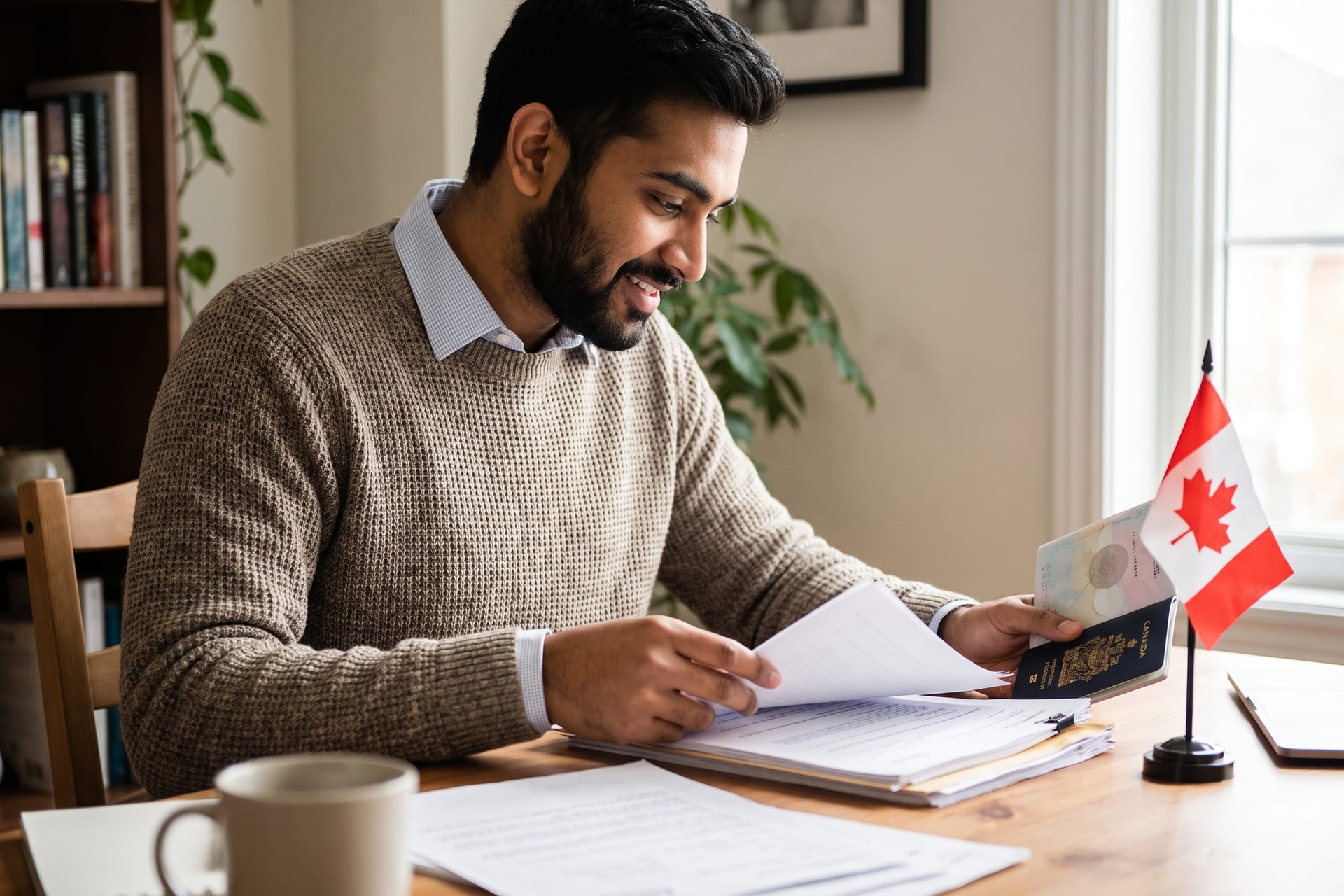

Understanding Canada student visa requirements is the first and most important step for any Indian student who wants to pursue higher education in Canada. Canada consistently ranks among the top study destinations in the world, attracting over 800,000 international students annually, and Indian students make up the single largest group among them. Whether you are planning to study at a university, college, or vocational institute, you must secure a valid Canadian study permit before you can begin your academic journey.
This complete guide breaks down every stage of the Canada student visa process for Indian students in 2026 — from eligibility criteria and required documents to application timelines and post-arrival formalities. Read this carefully before you begin your application.
What Is a Canada Study Permit?
A Canada study permit is an official document issued by the Government of Canada through Immigration, Refugees and Citizenship Canada (IRCC). It authorises you to study at a Designated Learning Institution (DLI) in Canada. Most full-time study programmes that last longer than six months require a study permit. The permit also functions as a work authorisation, allowing you to work up to 24 hours per week on campus and, in some cases, off campus during your studies.
It is important to note that a study permit is not a visa on its own. Indian passport holders also require a Temporary Resident Visa (TRV) or an Electronic Travel Authorization (eTA) to enter Canada, depending on their travel route. In most cases, both documents are issued together through the online study permit application via IRCC.
Canada Student Visa Requirements for Indian Students in 2026
1. Acceptance from a Designated Learning Institution (DLI)
Before anything else, you must receive an offer letter or Letter of Acceptance (LOA) from a DLI. Canada has over 1,900 approved DLIs, ranging from universities to community colleges and language schools. Make sure the institution you are applying to is on the official DLI list maintained by IRCC.
2. Proof of Financial Sufficiency
You must demonstrate that you have sufficient funds to cover tuition fees, living expenses, and return travel. IRCC updated its financial thresholds in September 2025. For 2026, the minimum financial requirements are:
• Tuition fees for the first year of your programme
• CAD 22,895 per year for living expenses (approximately CAD 1,908 per month) — updated September 2025
• Return airfare to India
You must provide bank statements, fixed deposit certificates, or a Guaranteed Investment Certificate (GIC) from a participating Canadian bank (minimum CAD 20,635 (the GIC minimum set by participating banks) in the GIC, with supplementary bank statements to bridge to the CAD 22,895 threshold). Note: The Student Direct Stream (SDS) was permanently closed by IRCC on 8 November 2024. All Indian students now apply through the regular stream.
3. English Language Proficiency
You must provide proof of English proficiency through an accepted test such as IELTS or PTE Academic. The minimum IELTS score for most Canadian universities is 6.0 overall (no band below 6.0), though competitive programmes may require 6.5 or 7.0. If you need coaching, Global Colliance IELTS and PTE coaching in Ahmedabad offers expert preparation to help you achieve the score you need.
4. Passport and Photograph
Your passport must be valid for the entire duration of your planned study period plus at least 60 days. Photographs must comply with Canadian immigration photo specifications — taken within the last six months on a plain white background.
5. Statement of Purpose (SOP)
A well-crafted Statement of Purpose explains your academic background, reasons for choosing Canada, career goals, and intention to return to India after your studies. This is one of the most important documents in your application and can significantly influence the visa officer's decision.
6. Medical Examination
A medical examination by a panel physician approved by IRCC is mandatory for most Indian students. This must be completed before you submit your study permit application, or shortly after, depending on the processing pathway you choose.
7. Police Clearance Certificate
Applicants are often required to submit a Police Clearance Certificate (PCC) from India. This verifies that you have no criminal record.
Processing Times for Canadian Study Permits in 2026
IRCC permanently closed the Student Direct Stream (SDS) on 8 November 2024. All study permit applications from Indian students are now processed through the standard stream. Current processing times for study permits from India are typically 8 to 16 weeks. IRCC regularly updates processing time estimates on its website, so always check the official IRCC portal for the latest figures before applying. To improve your chances of a faster decision, submit a complete, well-documented application with a strong Statement of Purpose and clear financial evidence.
Step-by-Step Canada Student Visa Application Process
Step 1: Receive Your Letter of Acceptance
Apply to your chosen Canadian university or college through their admissions portal. Once admitted, you will receive a Letter of Acceptance (LOA). This document is mandatory to start your visa application.
Step 2: Create an IRCC Online Account
Create a free account on the IRCC website (ircc.canada.ca) to submit your application online. This is the fastest and most common method. Alternatively, a paper-based application can be submitted at VFS Global centres in India.
Step 3: Gather and Upload Your Documents
Compile all required documents: passport, LOA, financial proof (bank statements, FDs, or GIC), IELTS results, SOP, medical report, police clearance, and photographs. Upload clear, high-resolution scans.
Step 4: Pay the Application Fee
The current study permit application fee is CAD 150 (approximately INR 9,500). If you have not provided biometrics to IRCC in the past 10 years, you will also need to pay a biometric fee of CAD 85. Both fees are paid online via credit or debit card.
Step 5: Submit Biometrics
After submitting your application, you will receive a Biometric Collection Notice. Visit the nearest VFS Global centre in India (Ahmedabad, Mumbai, Delhi, Chennai, or Kolkata) to provide fingerprints and photograph.
Step 6: Wait for a Decision
Processing times vary. As of 2026, most study permit applications from India take between 8 and 16 weeks. Check current processing time estimates on the IRCC website before you apply. You can track your application status through your IRCC portal account.
Step 7: Receive Your Port of Entry (POE) Letter
If approved, you will receive a Letter of Introduction (study permit approval letter). This is not the physical study permit — the actual permit is stamped at the Canadian port of entry when you arrive.
Post-Arrival Formalities in Canada
On arrival in Canada, you will present your Letter of Introduction and passport to the CBSA (Canada Border Services Agency) officer. Your study permit will be issued at the border. Here is what you need to do next:
• Get your SIN (Social Insurance Number) if you plan to work
• Open a Canadian bank account
• Register for health insurance in your province (OHIP in Ontario, MSP in British Columbia, etc.)
• Register at your institution and attend orientation
How Global Colliance Can Help
Navigating the Canada student visa requirements and process can be overwhelming, especially when you are managing university applications simultaneously. Global Colliance's Canada study abroad consultants in Ahmedabad have helped thousands of Gujarat students successfully obtain their Canadian study permits. From SOP writing and document preparation to financial planning and pre-departure orientation, we guide you at every step.
Connect with our overseas education consultants in Ahmedabad today for a free counselling session and personalised Canada student visa guidance.
Important External Resource
For official and up-to-date Canada study permit requirements, always refer to the IRCC official study in Canada page.
Conclusion
Canada remains one of the best study destinations for Indian students, offering world-class education, post-study work opportunities, and a clear pathway to permanent residency. With the SDS no longer available, a thorough, well-prepared regular application is now the only route — which makes working with an experienced consultant more valuable than ever. Start early, gather your documents carefully, meet the updated CAD 22,895 financial threshold, and reach out to Global Colliance for expert guidance.
On top of these requirements, most college and bachelor's students also need a provincial attestation letter, so read our guide on who needs one.