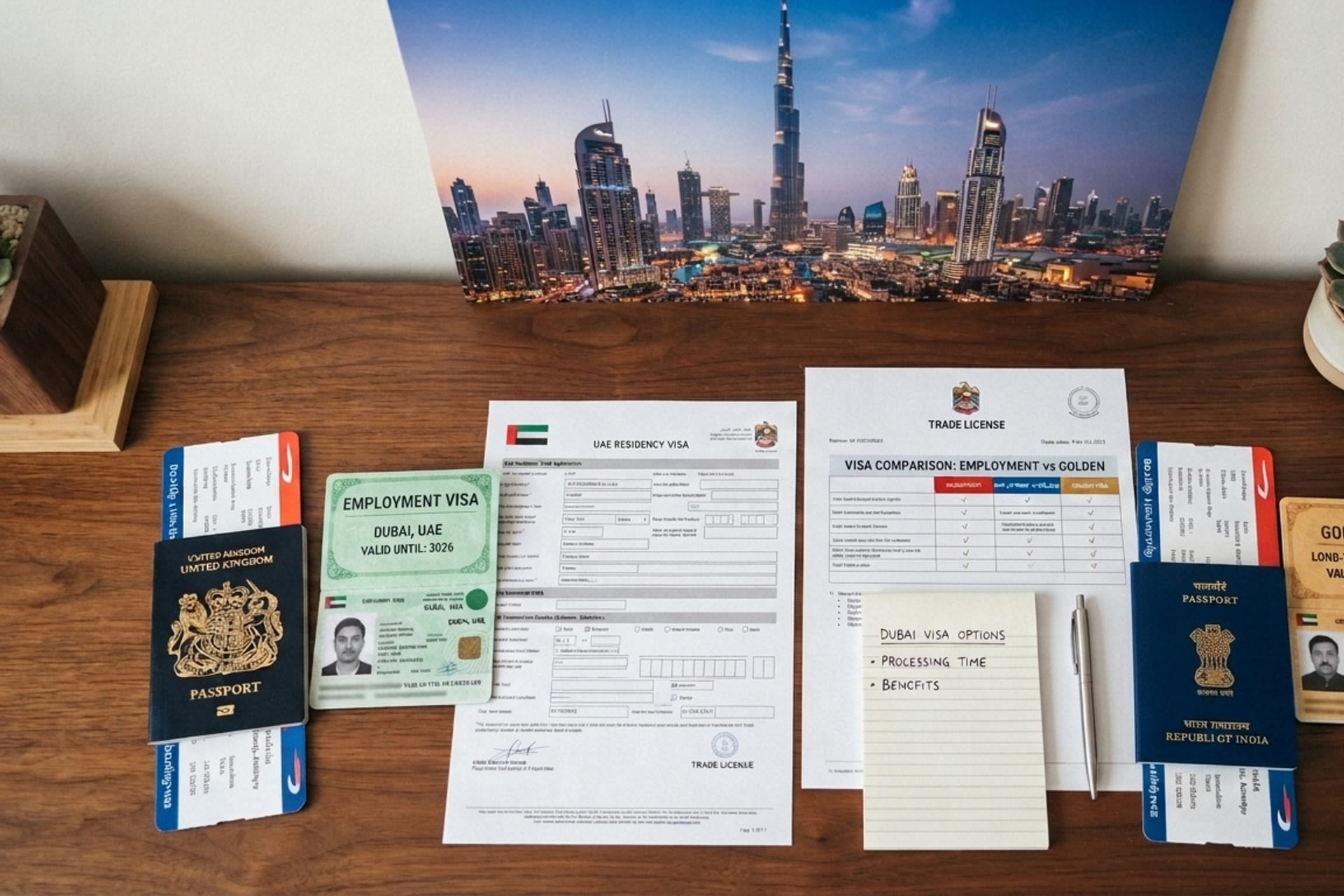

Quick Answer to Dubai Education Visa vs Student Visa: What's the Difference
In Dubai the terms overlap in everyday use, but the practical distinction is who sponsors you. A university-sponsored student visa is issued once you hold an offer from a licensed institution and covers the duration of study. Other education-related permits may be sponsored by a parent or guardian resident in the UAE. Requirements, renewal rules and work rights differ, so confirm which route your institution uses. Global Colliance handles admissions, financial documentation and visa filing as one process, so the exam date and the intake are planned together.
When planning to study in Dubai, students often come across two terms that can be confusing. Understanding the Dubai education visa and how it compares with the student residence visa is important, because knowing which one applies to your situation ensures a smooth process. This guide explains how each works, who sponsors them and which one Indian students need for higher education, based on our experience guiding students to Dubai.
Understanding the Dubai Education Visa and Student Visa
In Dubai, the terms education visa and student visa are often used together, but they refer to the residency arrangements that allow students to live and study in the UAE. Understanding the distinction helps you know exactly which route applies to your circumstances.
Broadly, a student residence visa for higher education is sponsored by the university once you enrol, while an education or dependent-based arrangement may apply to younger students sponsored by a resident parent. The Dubai education visa concept covers these study-related residency options.
For most Indian students pursuing higher education, the university-sponsored student residence visa is the relevant route. Knowing this from the start removes confusion and helps you follow the correct process for your situation.
The confusion between these terms is completely understandable, because in everyday conversation they are often used interchangeably. Clearing it up early simply means identifying who will sponsor your residency, which immediately tells you which process and documents apply to your situation.
How the University-Sponsored Student Visa Works
For university and college students, the student residence visa is sponsored by the educational institution once you are admitted and enrolled. This visa allows you to live in Dubai for the duration covered, usually one year, renewed for each year of your programme.
The process involves securing admission, completing a medical fitness test, obtaining an Emirates ID and arranging health insurance, all coordinated by your university. This makes the process straightforward for higher education students.
Because the university acts as your sponsor, your admission and visa are closely linked. This is the standard route for Indian students studying degrees in Dubai, and it is the arrangement most people mean when discussing a Dubai education visa.
For the vast majority of Indian students reading this, the answer is the university-sponsored student residence visa, since most are pursuing higher education. Recognising this at the outset removes unnecessary worry and lets you focus on the straightforward, institution-led process.
When a Parent-Sponsored Education Visa Applies
For younger students, such as those attending school in Dubai, residency is usually arranged through a parent or guardian who is a UAE resident. In this case, the student is sponsored as a dependent rather than by an educational institution.
You can review official residency and education information on the official UAE Government portal, which is the authoritative source. This dependent-based route is different from the university-sponsored student residence visa used for higher education.
Understanding which arrangement applies depends on your age, level of study and family circumstances. For Indian families with a resident parent in Dubai, this route may apply to school-age children, while university students use the sponsored student visa.
The dependent route, sponsored by a resident parent, is genuinely relevant only in specific family circumstances, typically for school-age children. Understanding that this is a separate arrangement helps you avoid applying the wrong requirements to your own situation.
Key Differences Between the Two Routes
The main difference lies in who sponsors the visa. For higher education, the university sponsors your student residence visa, while for younger, dependent students, a resident parent typically provides sponsorship. This affects the process and the documents required.
The eligibility and steps differ accordingly. University students complete the residency process through their institution, while dependent students follow the process linked to their sponsoring parent's residency. Both allow the student to live and study in Dubai.
Knowing which route applies ensures you follow the correct process and prepare the right documents. For most Indian students pursuing degrees, the university-sponsored student residence visa is the clear answer.
Because the university coordinates the higher education route, it is generally efficient and well-supported. Your institution guides you through the medical test, Emirates ID and insurance, which means the process feels far less daunting than arranging residency entirely on your own.
Which Visa Indian Students Need for Higher Education
For Indian students enrolling in a university or college in Dubai, the university-sponsored student residence visa is the route you need. Once you secure admission and enrol, your institution begins sponsoring your visa and guides you through the residency steps.
This means your first priority is securing admission to an approved university, after which the visa process follows naturally. Understanding this link between admission and the visa helps you plan your journey with clarity.
Because the university coordinates the process, studying in Dubai for higher education is generally straightforward. Knowing that the student residence visa is your route removes any confusion around the education visa terminology.
A practical tip is simply to confirm with your chosen university, at the point of admission, exactly how it will sponsor your visa. This single conversation resolves any lingering confusion and gives you a clear, accurate roadmap for the steps ahead.
Common Confusions About the Dubai Education Visa
A frequent confusion is assuming the education visa and student visa are entirely separate schemes, when in practice they describe study-related residency arrangements that differ mainly by who sponsors them. Clarifying this early prevents unnecessary worry.
Another confusion is around eligibility and sponsorship. For higher education, you do not need a family sponsor, as your university sponsors you, whereas school-age students are typically sponsored by a resident parent.
Understanding these distinctions clearly helps you follow the correct path. For Indian degree students, the university-sponsored student residence visa is the straightforward answer to the Dubai education visa question.
Keeping your documents current and following your university's guidance on renewal ensures your residency remains valid throughout your programme. Because the student residence visa is renewed each year, a little attention to timing keeps everything running smoothly.
How Global Colliance Helps You Choose the Right Route
Understanding which visa route applies and following the correct process is exactly where guidance helps. Our Dubai student visa consultants clarify your situation, help you secure admission and guide you through the residency steps, ensuring you follow the right path from the start.
You can also explore our full range of services on the Global Colliance homepage. With expert support, the difference between the Dubai education visa and student visa becomes clear, and your journey to studying in Dubai starts smoothly.
Because we guide many students to Dubai, we understand how the routes work and how universities coordinate the visa. That experience helps you avoid confusion and move confidently from admission to your residence visa.
With the terminology clarified and the right route identified, studying in Dubai becomes a clear and achievable goal. The key is simply knowing that, for higher education, the university-sponsored student residence visa is the path you will follow.
Making the Right Choice for Your Dubai Studies
Choosing the right route comes down to your level of study and circumstances. For higher education, the university-sponsored student residence visa is the clear path, while dependent arrangements apply to younger students sponsored by a resident parent.
Once you know which route applies, the process becomes straightforward, especially with your university coordinating the higher education visa. Understanding the terminology simply helps you plan and prepare with confidence.
With clarity on the Dubai education visa and student visa, and expert support to guide you, studying in Dubai becomes a well-organised, achievable goal. The right information at the start makes the whole journey smoother.
Ultimately, the distinction is simpler than it first appears once you focus on the sponsor. Confirming with your university how your residency will be arranged resolves any doubt, and for higher education the university-sponsored student residence visa is almost always the answer you are looking for.
If you are comparing Dubai with the UK, USA, Canada or Australia, our guide to education visa vs student visa explains the official student visa name in each country and why a visitor visa cannot be used for a degree.
FAQs About the Dubai Education Visa
What is the difference between a Dubai education visa and a student visa?
Both allow students to live and study in Dubai, but they differ by sponsor. For higher education, the university sponsors your student residence visa, while younger students are usually sponsored by a resident parent.
Which visa do Indian students need for higher education in Dubai?
Indian students pursuing degrees need the university-sponsored student residence visa, which your institution arranges once you are admitted and enrolled.
Who sponsors the Dubai student visa for university students?
For higher education, your university sponsors and coordinates the student residence visa, closely linking your admission and visa steps.
Can a parent sponsor a student in Dubai?
Yes. For younger, school-age students, a resident parent or guardian typically sponsors residency as a dependent, which differs from the university-sponsored route.
Is the Dubai education visa the same as a student visa?
The terms are often used together and describe study-related residency arrangements that differ mainly by who sponsors them, with university students using the student residence visa.