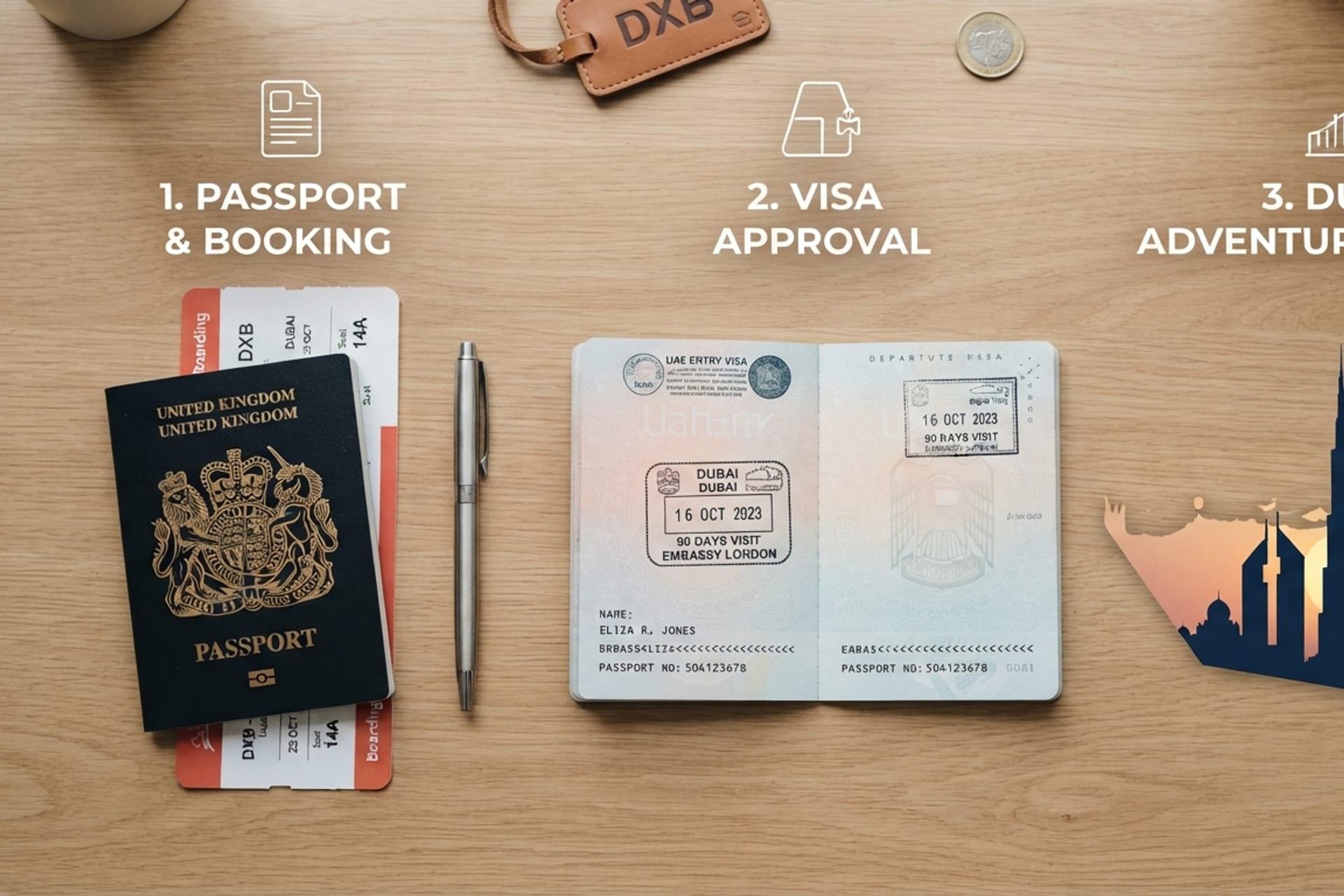

Quick Answer to Dubai Study Visa Process: Timeline & Approval Tips
The Dubai study visa process runs through your university, which sponsors the application once you hold an offer. Plan for admission, medical testing, Emirates ID and stamping, and allow time for each stage before your intake. Approval depends mainly on a complete document set and a valid sponsorship from a licensed institution, so the practical risk is timing and paperwork rather than eligibility. Global Colliance prepares the financial documentation and interview practice these applications turn on.
Knowing roughly how long each stage takes is what turns an unfamiliar process into a manageable one, and Dubai's timeline is genuinely shorter than most Western alternatives once you understand its shape. The Dubai study visa process moves through admission, entry permit, arrival formalities and residence issuance, each with its own realistic window. This guide sets out that timeline honestly and shares the practical habits that keep approval smooth.
How Long the Dubai Study Visa Process Actually Takes
From accepted offer to issued residence visa, most students complete the full sequence within four to eight weeks, though this varies with university processing speed and how quickly you supply requested documents.
Admission itself can take anywhere from a few days to several weeks depending on the institution and how complete your initial application is. Universities that admit on rolling decisions tend to move faster than those working to fixed committee dates.
The entry permit stage, once your university begins sponsorship, typically takes one to two weeks. This is largely outside your control, since it depends on the institution's internal processing rather than anything you can accelerate yourself.
Post-arrival steps, the medical test, Emirates ID and insurance, generally complete within two to three weeks of landing, provided you attend appointments promptly and your documents are in order from the outset.
It also helps to understand that Dubai's timeline advantage comes largely from having a single sponsor, your university, coordinating most of the process rather than you managing several independent government applications simultaneously. That structural simplicity is precisely why the overall sequence tends to move faster than comparable processes in Canada, the UK or Australia.
Where Delays Most Commonly Happen
Incomplete initial applications are the single biggest cause of slow admission. Missing transcripts, unclear scanned documents or an incomplete English proficiency section routinely add weeks that a complete submission would have avoided entirely.
Tuition deposit delays are the second common bottleneck. Because the entry permit process only begins once your deposit clears, an international transfer that takes longer than expected pushes back everything that follows it.
Passport validity issues surface more often than expected. A passport nearing expiry, or one with insufficient blank pages, can stall the entry permit stage, and renewing an Indian passport under time pressure is considerably more stressful than checking early.
Missed medical test appointments cause the most avoidable post-arrival delays. Students who assume they can attend whenever convenient often find the approved centres booked, pushing the entire remaining timeline back by a week or more.
Students sometimes assume that paying extra for expedited processing speeds up every stage, but this typically applies only to specific government fees rather than the whole sequence. University admission timelines and appointment availability for the medical test remain largely fixed regardless of any premium fee paid elsewhere in the process.
Preparing Documents to Move Quickly
Scan every document at high resolution before you need it, not when a portal asks for it. Blurry or partial scans are rejected and resubmitted, and each round trip through that cycle costs several days.
Keep a single folder, digital and physical, containing your passport copy, academic records, admission letter, tuition receipt and photographs. Having everything assembled means you respond to requests within hours rather than days.
Verify your institution's accreditation before you commit through the official KHDA website. Confirming this early avoids the far more serious delay of discovering a recognition problem after you have already paid your deposit.
Where English proficiency evidence is required, book your test early enough that a retake remains possible. A test scheduled at the last moment removes any safety margin if your first attempt falls short of the requirement.
Approval Tips for the Admission Stage
Apply to your realistic shortlist rather than a single university. Running two or three applications in parallel protects your timeline if one institution processes more slowly than expected or requests additional information.
Respond to admissions queries within a day wherever possible. Universities process applications in the order responses arrive, and a prompt reply to a routine query often moves your file ahead of others still waiting.
Confirm exactly what your tuition deposit needs to include before transferring funds. An underpaid deposit or one missing a required reference number is a common and entirely preventable cause of processing delay.
Ask your university directly for their typical processing timeline rather than relying on general estimates. Institutions vary meaningfully, and a specific answer from admissions staff is more useful than any average figure.
A practical habit worth adopting is calling your university's international office directly rather than relying solely on email for time-sensitive updates. Phone conversations often surface information, such as a processing backlog or a document clarification needed, days before the same detail would appear in a written response.
Approval Tips for the Visa Stage
Once your entry permit is issued, book travel promptly but not before confirmation arrives. Booking in anticipation and then needing to change tickets because of processing variation costs considerably more than a short wait.
Arrive with a buffer before term starts. Landing a week or more ahead of your course start date gives you room to complete the medical test and Emirates ID without racing your first day of classes.
Book your medical test appointment as soon as your university confirms the approved centre and process. Slots fill quickly during peak intake periods, and waiting to book once you arrive often means a longer queue than necessary.
Keep your university's international office informed of your arrival date. Institutions that know when to expect you can schedule your remaining steps in advance rather than starting the process only once you land.
What Happens if the Process Is Delayed
A short delay rarely threatens your enrolment, since Dubai universities are accustomed to residence formalities running slightly behind the academic calendar and generally allow a grace period for late-arriving students.
Communicate proactively rather than waiting to be asked. If your entry permit or medical test is delayed for reasons outside your control, informing your university promptly usually results in reasonable accommodation for your enrolment and attendance.
You can review official processing information on the official UAE Government education portal to understand realistic expectations rather than relying on informal accounts, which vary considerably and are not always current.
If a delay stretches beyond a couple of weeks, ask specifically what is causing it rather than accepting a vague explanation. Most bottlenecks have an identifiable cause, and knowing it lets you address it directly rather than simply waiting.
Weather and public holidays in the UAE occasionally affect appointment availability at government service centres, particularly around Eid and other national observances. Checking the UAE public holiday calendar against your planned appointment dates avoids scheduling around a closure you had not anticipated.
Building Your Own Realistic Timeline
Work backwards from your intended course start date. Allowing eight weeks from application to arrival, with a further two to three weeks post-arrival for residence steps, gives you a comfortable rather than a minimal schedule.
Build in slack around each transition point specifically, since these are where delays concentrate: application to offer, offer to entry permit, and arrival to residence issuance. A little buffer at each point compounds into meaningful protection overall.
Track your own progress against this timeline rather than assuming things are moving on schedule. A simple checklist with expected and actual dates for each stage makes it immediately obvious if something needs following up.
Treat the whole sequence as a series of dependent steps rather than isolated tasks. Understanding what each stage unlocks for the next is what lets you plan sensibly rather than reacting to each requirement as it appears.
Getting Approved Without Unnecessary Delay
Working through this with a team that handles the route regularly removes most of the uncertainty. Our Dubai student visa consultants assess your position honestly, build a realistic plan around your intake and keep each stage moving so nothing is left until it becomes urgent.
You can also explore our full range of destinations and services on the Global Colliance homepage, and compare where your goals, budget and academic record genuinely fit best before committing.
Because we guide students across every major destination rather than promoting one, our recommendations follow your profile rather than a partnership. Where another country would serve you better, we say so plainly.
The sensible first step is a candid conversation about where you stand today. From that assessment through to arrival, having one team accountable for the whole sequence is what keeps a complex process predictable.
FAQs About the Dubai Study Visa Process
How long does the Dubai study visa process take?
Most students complete the full sequence, from accepted offer to issued residence visa, within four to eight weeks, though this varies with university processing speed and document completeness.
What causes the most delays in the Dubai visa process?
Incomplete initial applications, slow tuition deposit transfers, passport validity issues and missed medical test appointments are the most common and most avoidable causes of delay.
Can I speed up my Dubai student visa approval?
Yes, by submitting complete, high-resolution documents upfront, responding to queries within a day, confirming deposit requirements before transferring funds and booking medical appointments promptly.
What happens if my Dubai visa is delayed past my start date?
Universities are generally accommodating of short delays tied to residence formalities. Communicate proactively with your international office rather than waiting to be asked about your status.
Do I need to book the medical test before arriving in Dubai?
You typically book it after your university confirms the approved centre and process, but doing so promptly on arrival avoids the longer queues common during peak intake periods.