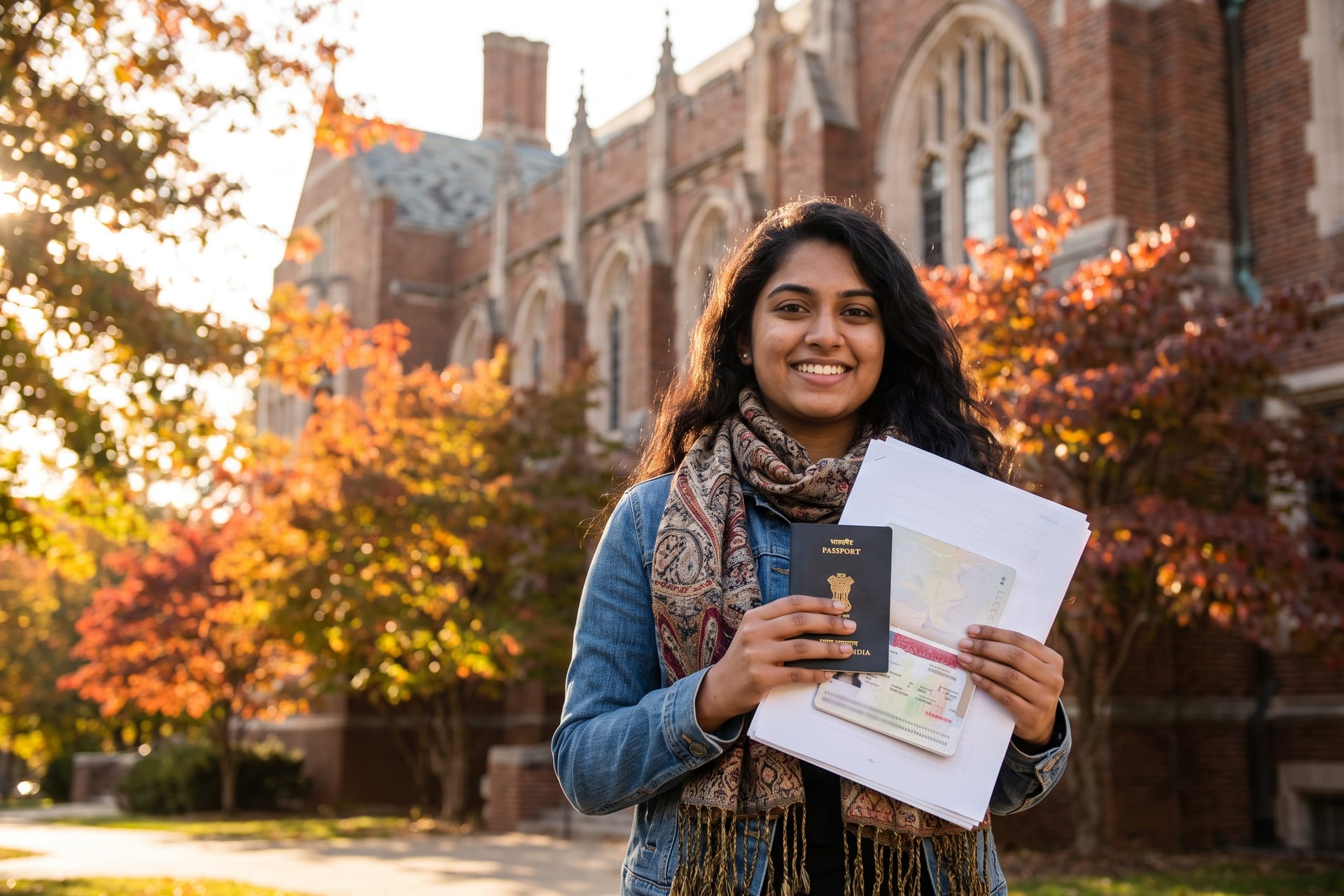

Quick Answer to F-1 Visa USA Explained: Eligibility, Process, and Benefits
The F1 visa is the standard US student visa for full-time academic study. You need admission to a SEVP-approved institution, an I-20, a paid SEVIS fee and a successful visa interview. It permits limited on-campus work, and after graduation allows Optional Practical Training, with a longer extension for eligible STEM fields. The interview is a genuine assessment of your study plan, funding and intent. Global Colliance helps students compare total cost across destinations and build the financial evidence each visa route requires.
The F-1 visa lets many students study in the USA — without it, they might not reach their academic goals there. This is the student visa for a full-time course of study at an approved school, college, or university in America. The procedure can confuse students in India; however, with help from the best consultant for USA student visa, it becomes much easier to understand and follow. Getting an F-1 visa isn't simply a matter of a stamp on your passport — it's about showing that you have a genuine study plan, adequate finances, and a clear intention to return home after your course. That's why students must understand the complete procedure before applying. Once you know what it involves, it feels a lot less stressful than it may seem. This is a simple explanation of what an F-1 visa is, covering eligibility requirements, the application process, and the benefits available. Planning a study abroad trip? This could help you start with a fresh perspective and more confidence.
What the F-1 Visa Means
An F-1 visa is a non-immigrant visa for those who wish to study in the United States on a full-time basis. It's only granted to individuals who've been admitted to a school approved by the Student and Exchange Visitor Program (SEVP). Upon acceptance, the school provides the student with a visa form called Form I-20. This visa covers academic programmes at universities, colleges, sometimes high schools, language training courses, and other approved educational institutions. The student must remain enrolled full-time throughout the course — a less-than-adequate course load can affect visa status.
Who Can Apply
An F-1 visa is available to students who've been admitted by an SEVP-approved school. They should also be able to provide proof of sufficient financial resources for tuition, room and board, and other expenses in the USA — financial proof is a crucial part of the application. A good command of English is also essential, since students need to understand and communicate well enough for their chosen course. This also helps demonstrate the student's genuine intention to study in the USA and how the course connects to their future plans. Candidates are also expected to answer questions truthfully during the interview. After reviewing the application, the embassy officer will ask about plans, funds, university, and course. Simple, clear answers are usually better than long, rehearsed ones.
Step-by-Step Process
It begins with admission to a school in the US. Once the student has the I-20 form, they pay the SEVIS fee. Next comes the DS-160 form, the official online visa application. Once the form is complete, the student schedules an interview with the US Embassy or Consulate. The interview is a key part of the process — typically brief, but it can make a big difference. Students should bring all required documents, such as a passport, the I-20, fee receipts, the admission letter, financial documents, and academic records. The officer observes the student's intentions and preparation during the interview — when answers are clear, documents are solid, and the odds of approval improve considerably. A relaxed attitude helps here too: you don't need to be perfect, just honest and prepared.
Benefits of the F-1 Visa
An F-1 visa gives students access to quality education in the USA, allowing them to attend world-class schools and learn advanced techniques in their field. This is one big reason many students choose it. Another advantage is work experience — F-1 students may be permitted to work on campus, with restrictions, and might also be eligible for CPT or OPT, which provide hands-on experience in their area of study. This helps students gain experience while they study, which becomes a big advantage once they enter the workforce. The visa also opens the door to a wide range of global life experiences. Students interact with people from other countries, build communication skills, and learn to become more independent — something many consider just as valuable as the degree itself.
Common Mistakes to Avoid
Many students run into trouble due to missing documents, weak or insufficient financial proof, or vague, unclear answers during the interview. Some apply for a visa without a clear understanding of the rules governing it, which can cause problems later. Copying and reciting rehearsed answers is also not recommended — officers can often tell when someone isn't being natural, so it's best to be straightforward and sincere. Last-minute preparation should be avoided too, since a rushed file is more likely to contain errors.
Conclusion
The F-1 visa is what enables foreign students to enter the USA for an educational programme. It provides access to quality education, real training opportunities, and a chance to grow in a new environment. The process runs smoothly when students plan properly, gather the correct documents, and stay honest in their responses at every stage. For many students, it's the clarity and reduced confusion that a USA student visa consultant in Surat provides that makes all the difference. The dream of studying in the USA can go from a wish to a reality with the right support and a solid study plan.
FAQs
1. What is an F-1 visa for the USA?
An F-1 visa is a student visa offered to international students wishing to attend an approved school, college, or university in the USA on a full-time basis.
2. Who is eligible for an F-1 visa?
Students who've been admitted by an SEVP-approved school, with financial evidence and a clear study plan, are eligible for an F-1 visa.
3. What documents are needed for the F-1 visa process?
A passport, Form I-20, SEVIS fee receipt, DS-160 confirmation, admission letter, financial documents, and academic records are all commonly required.
4. How long does the F-1 visa process take?
Processing time can vary depending on the school and the time needed to prepare for the embassy appointment and gather documents, so students should begin the process early to avoid delays.
5. Can I work on an F-1 visa?
Yes, in certain cases, such as on-campus jobs, CPT, and OPT, F-1 students may work — but they need to stay mindful of the visa requirements that apply.