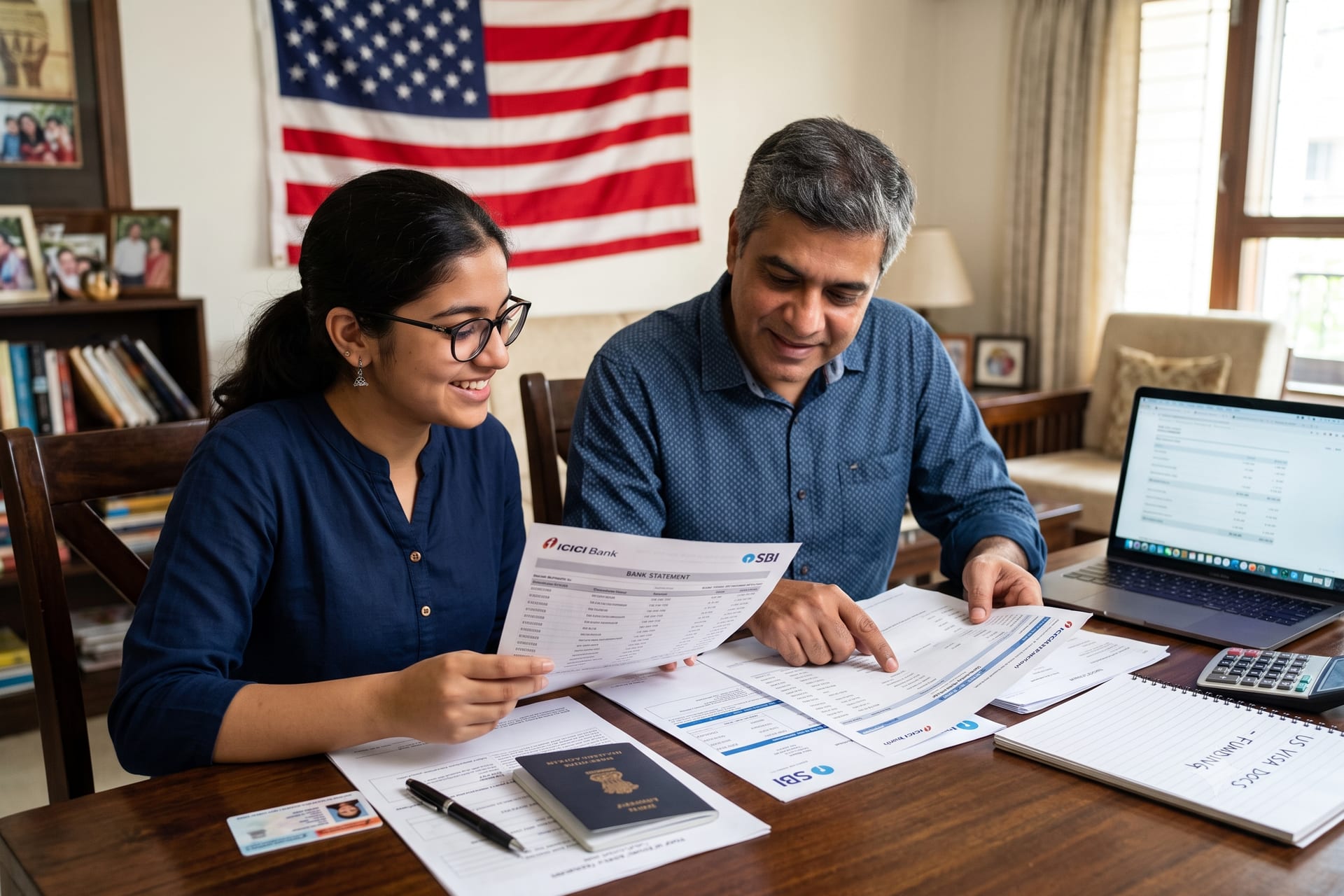

Quick Answer to Proof of Funds for USA Student Visa: How Much & How
Proof of funds for a US student visa must cover the first year's tuition plus living expenses as stated on your I-20. Acceptable evidence includes bank statements, fixed deposits, education loan sanction letters and sponsor affidavits with supporting documents. Funds should have a traceable history rather than appearing suddenly before the interview, since consular officers assess both the amount and its credibility. Global Colliance helps students compare total cost across destinations and build the financial evidence each visa route requires.
Financial documentation is at the heart of every successful F-1 application, and getting it right is essential. Strong proof of funds for a USA student visa shows the officer you can pay your tuition and living costs without difficulty, which is one of their central concerns. This guide explains exactly how much you need, which documents count, and how to present your funds convincingly, based on our experience preparing F-1 applications.
How Much Proof of Funds for USA Student Visa You Need
The amount you must show is based on the cost of attendance stated on your Form I-20, which combines one year of tuition and estimated living expenses. Depending on your university and city, this typically ranges from about USD 35,000 to USD 75,000 for the first year. You should be able to demonstrate funds that cover at least this first year, and ideally show the ability to fund your full program.
Always use the exact figure on your I-20 as your benchmark, since that is the number the officer references.
Accepted Documents for Proof of Funds for USA Student Visa
Several documents can demonstrate your funds. These include bank statements and passbooks, fixed deposit certificates, education loan sanction letters from recognised banks, and, at postgraduate level, scholarship or assistantship award letters. If a family member is sponsoring you, include their bank statements, income proof and an affidavit of support along with proof of your relationship.
Liquid, readily accessible funds carry the most weight, so prioritise savings, deposits and sanctioned loans over assets that cannot be quickly used for tuition.
How to Present Proof of Funds for USA Student Visa
Presentation matters as much as the amount. Your funds should look stable and clearly sourced. Avoid sudden large deposits just before the interview, since these raise suspicion. Keep statements recent, organised and consistent with the figures you state in your DS-160 and interview. Be ready to explain where your money comes from in one or two clear sentences.
A calm, confident explanation backed by clean documents is exactly what officers want to see.
Common Mistakes with Proof of Funds for USA Student Visa
The most frequent mistakes are showing insufficient funds, relying on assets that cannot be liquidated for tuition, presenting sudden unexplained deposits, and giving inconsistent figures across documents and answers. Any of these can lead to a refusal even when the underlying finances are adequate.
You can review official student visa guidance on the US Department of State student visa page, which is the authoritative source, and prepare your funds to align with it.
Tips to Strengthen Proof of Funds for USA Student Visa
Start early so your funds show stability over several months. Arrange your education loan sanction letter in advance if you are financing your studies. Keep sponsor documentation complete, including relationship proof and income evidence. Above all, ensure every figure you present is consistent across your I-20, DS-160, documents and interview answers.
Consistency and clarity are the two qualities that turn adequate funds into convincing proof.
Get Help with Proof of Funds for USA Student Visa
Structuring and presenting your funds correctly is one of the most valuable things you can get right, and it is where expert guidance pays off. Our USA student visa consultants help you build a strong, consistent financial file and prepare your answers for the interview. You can also explore our full range of services on the Global Colliance homepage. With well-prepared proof of funds, one of the biggest F-1 concerns is handled with confidence.
Sponsor Documentation for Proof of Funds for USA Student Visa
Many Indian students rely on a parent or close relative as a financial sponsor, and presenting sponsor funds correctly is essential. Strong proof of funds for a USA student visa in these cases includes the sponsor's recent bank statements, income proof such as salary slips or income tax returns, an affidavit of support, and clear evidence of the sponsor's relationship to you. Incomplete sponsor documentation is a common weakness that raises doubts.
The officer wants to see that your sponsor genuinely has the means to support you and a clear reason to do so. Well-organised, verifiable sponsor documents that align with the amounts on your I-20 make your funding credible. Preparing these thoroughly, rather than presenting a single bank statement, significantly strengthens this part of your application.
Liquid vs Fixed Assets in Proof of Funds for USA Student Visa
Not all funds carry equal weight in your proof of funds for a USA student visa. Liquid assets, such as savings, fixed deposits and sanctioned education loans, are strong because they can be readily used for tuition and living costs. Illiquid assets, like property or investments that cannot be quickly converted to cash, are far less persuasive on their own, since they do not demonstrate immediate access to funds.
When building your financial file, prioritise liquid, accessible funds that clearly cover at least your first year. If part of your funding relies on assets, be ready to explain how they translate into available cash for your studies. Presenting genuinely usable funds, rather than paper wealth, is what reassures the officer that you can meet your costs.
Timing and Stability in Proof of Funds for USA Student Visa
Officers look closely at the stability and history of your funds. Sudden large deposits appearing just before your interview are a classic red flag, since they suggest funds arranged solely for the visa rather than genuine, available resources. Strong proof of funds for a USA student visa shows money that has been in place over time, with clearly explainable sources.
To present your funds well, maintain stable balances over several months, arrange any education loan sanction letter in advance, and be ready to explain the origin of your funds in one or two clear sentences. Consistency between your documents, your DS-160 and your interview answers ties everything together. This stability and clarity is often the difference between an approval and an avoidable refusal.
Presenting a Clear Funding Story
Strong proof of funds for a USA student visa is not just about having enough money; it is about presenting a clear, believable funding story. The officer wants to understand, at a glance, how your entire education will be paid for. That means showing how your savings, education loan, sponsor support and any scholarships combine to cover the cost of attendance stated on your I-20. When these pieces fit together logically, your funding appears genuine and well-planned rather than assembled at the last minute.
Consistency across every element ties the story together. The figures in your bank statements, loan sanction letter and sponsor documents should align with the amounts you state on your DS-160 and repeat in your interview. Any contradiction, even a minor one, undermines the whole picture, so reconcile your numbers carefully before you apply. Being able to summarise your funding plan confidently in a sentence or two is a strong sign of preparation that officers notice.
Finally, anticipate the natural follow-up questions. Be ready to explain where your funds came from, why your sponsor is supporting you, and how you will manage costs beyond the first year. A calm, clear explanation backed by organised documents reassures the officer that you can genuinely afford your studies. By treating proof of funds for a USA student visa as a coherent, consistent and well-explained story rather than a pile of statements, you address one of the F-1 officer's central concerns and significantly strengthen your chances of approval.
Expert Help with Proof of Funds for USA Student Visa
Because proof of funds for a USA student visa is one of the officer's central concerns, expert help in structuring and presenting your finances is genuinely worthwhile. A consultant ensures your funds meet the cost of attendance on your I-20, are held in an acceptable and accessible form, and are documented clearly with any sponsor or loan paperwork complete. This preparation removes the most common financial weaknesses that lead to refusals.
Good guidance also prepares you to explain your funding confidently at the interview, keeping your documents, DS-160 and answers fully consistent. When your funding story is clear, stable and well-evidenced, you address one of the biggest F-1 concerns head-on. By combining a strong financial file with confident, consistent presentation, you significantly improve your chances of approval and make proof of funds for a USA student visa a strength rather than a stumbling block.
Funding doubts are one of the most common causes of an F-1 visa rejection under 214(b), and our guide explains how to fix them before you reapply.
If you are still comparing the USA with other countries, see the bank balance required for student visa applications in the UK, Canada, Germany, Australia, New Zealand and Ireland.
FAQs About Proof of Funds for USA Student Visa
How much proof of funds for a USA student visa do I need?
You should show at least the first year cost of attendance stated on your I-20, typically about USD 35,000 to USD 75,000, and ideally the ability to fund your full program.
Which documents count as proof of funds for a USA student visa?
Bank statements, fixed deposits, education loan sanction letters, and scholarship or assistantship letters all count, along with sponsor income proof and an affidavit of support if applicable.
Can an education loan be used as proof of funds for a USA student visa?
Yes. A sanction letter from a recognised bank is strong evidence of funds, especially when paired with clear, stable supporting documentation.
What is the biggest mistake with proof of funds for a USA student visa?
Showing sudden large deposits just before the interview is a common mistake, as it raises doubts about the source of funds. Aim for stable, clearly-sourced funds instead.
Do sponsor funds work as proof of funds for a USA student visa?
Yes, provided you include the sponsor's bank statements, income proof, an affidavit of support and evidence of your relationship to them.