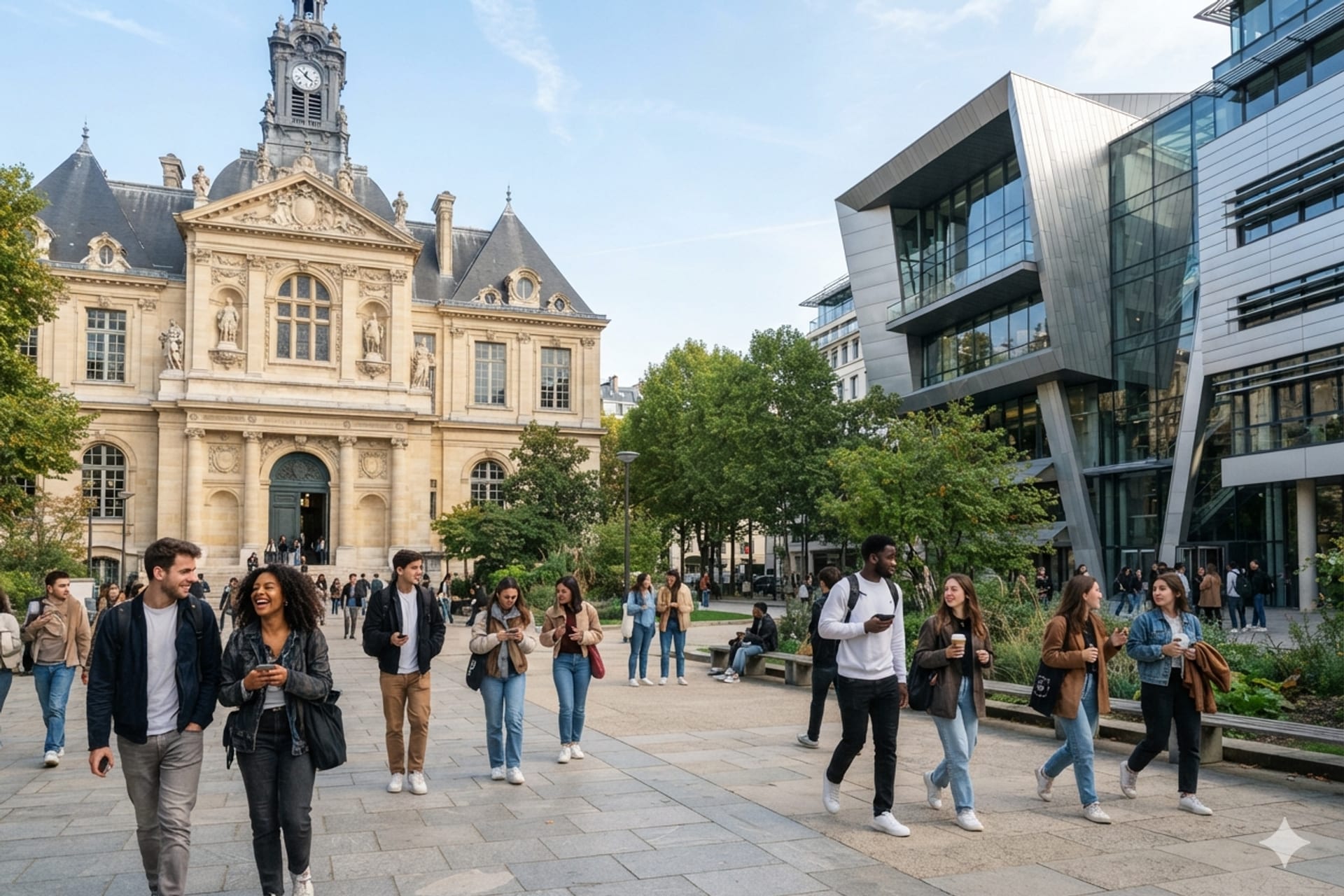

Quick Answer to Study in France: Public vs Private Universities
French public universities charge low, nationally set tuition and offer recognised degrees across most disciplines. Private institutions and grandes écoles charge considerably more but often provide stronger industry links, smaller cohorts and more English-taught options in business and management. Both routes are legitimate; the choice usually comes down to budget, discipline and how much English-taught provision you need. Global Colliance helps students compare total cost across destinations and build the financial evidence each visa route requires.
When you decide to study in France, one important choice is whether to attend a public university or a private institution. Understanding the differences when you study in France, across cost, admission, quality and recognition, helps you choose the right path. This guide compares public and private universities honestly to help Indian students decide, based on our experience placing students across both types of French institutions.
Public vs Private When You Study in France
When you study in France, you can choose between public universities, which are state-funded and affordable, and private institutions, including business schools and specialised schools, which charge higher fees but often offer strong industry links.
Both types can offer excellent education, but they differ in cost, admission style, teaching approach and the fields they specialise in. Understanding these differences is essential to choosing the right institution for your goals.
The right choice depends on your budget, field of study and career ambitions. Neither type is automatically better; each suits different students and goals when you study in France.
The most important thing to grasp is that neither public nor private is inherently better; each excels for different students and goals. A cost-conscious student pursuing a broad academic subject may be ideally served by a public university, while another seeking a specialised business or design programme may find a private school worth its higher fee.
A helpful final perspective is to visit or research the specific institutions on your shortlist rather than deciding on the public-versus-private label alone. The reality of a particular university, its programme, faculty and student community, tells you far more about whether it fits you than any broad category ever could.
Cost: Public vs Private Universities in France
Public universities are the affordable option when you study in France, with low subsidised tuition, often between a few hundred and a few thousand euros per year for non-EU students. Private institutions, especially business schools, charge considerably more, sometimes tens of thousands of euros.
You can review official information about French institutions on the official Campus France website, which is the authoritative source. The cost difference is significant, so your budget is an important factor in this decision.
For cost-conscious students, public universities offer outstanding value. Private institutions may justify their higher fees through specialised programmes, industry links and career outcomes in certain fields.
Public universities offer remarkable value that is genuinely difficult to match anywhere in the world, with low tuition and strong, research-based teaching. For families prioritising affordability without compromising on quality, France's public system remains one of the most compelling options available today.
Admission: Public vs Private Universities
Admission to public universities is based mainly on academic merit and meeting the entry requirements, with the Campus France procedure applying to Indian students. Admission to private institutions, especially top business schools, can be more selective, sometimes involving entrance exams or interviews.
Both routes require careful preparation, but the process differs. Public universities focus on academic eligibility, while selective private schools assess a broader profile including tests and, for some, work experience.
Understanding the admission process for each type helps you prepare effectively. Matching your profile to the admission style of your target institution is an important part of choosing where to study in France.
Private institutions, particularly the famous business schools and specialised schools, justify their higher fees through tight industry links, extensive internships and strong graduate outcomes in their fields. For students targeting careers in business, luxury, fashion or hospitality, these connections can be genuinely transformative.
Quality and Specialisations
Public universities in France offer strong, research-based education across almost every subject, and several rank among the world's best. Private institutions often specialise in business, management, fashion, design or hospitality, with strong industry connections.
For research-focused or broad academic study, public universities excel. For specialised, career-focused programmes in fields like business or fashion, private institutions and Grandes Ecoles are often outstanding.
When you study in France, matching the type of institution to your field is key. The best choice depends on whether your goals suit a research university or a specialised private school.
The admission processes differ enough that matching your profile to the right route matters from the outset. Public universities focus mainly on academic eligibility through the Campus France procedure, while selective private schools often assess a broader profile including entrance tests, interviews and sometimes work experience.
Recognition and Career Outcomes
Both public and private French institutions can offer globally recognised qualifications, but recognition varies by institution and programme. Top public universities and leading private business schools both carry strong reputations with employers.
For career outcomes, the specific institution and its reputation in your field matter more than whether it is public or private. A well-regarded programme, of either type, opens strong career doors.
Checking the recognition, accreditation and graduate outcomes of any institution before you commit is essential. This ensures your qualification is valued wherever you plan to build your career.
Recognition and accreditation deserve careful checking whichever route you consider, since reputation varies by institution rather than simply by public or private status. Confirming that a programme is well-regarded and properly accredited in your field ensures your qualification carries genuine weight wherever you build your career.
Which Should You Choose to Study in France
The right choice depends on your priorities. If affordability and broad academic study matter most, a public university is ideal. If you seek a specialised, career-focused programme in business or a creative field, a private institution may be worth the higher cost.
Consider your budget, field of study, career goals and preferred learning style together. Matching these to the strengths of public or private institutions leads to the best decision for you.
When you study in France, both public and private paths can lead to success. The best choice aligns with your goals, budget and the field you wish to pursue.
It is also worth thinking about the learning environment that suits you, since public and private institutions can differ in class size, teaching style and campus culture. Choosing a setting where you will genuinely thrive is as important to your success as the prestige attached to the institution's name.
How a Consultant Helps You Choose
Comparing public and private institutions and choosing the right one is exactly where guidance helps. Our France student visa consultants help you weigh cost, admission, quality and recognition, and choose the French institution that best fits your goals and budget.
You can also explore our full range of services on the Global Colliance homepage. With expert support, choosing where to study in France becomes a clear, confident decision aligned with your ambitions.
Because we place students across both public and private French institutions, we can offer balanced advice tailored to your field and goals. That experience helps you choose wisely.
Budget planning should account for the full picture, not tuition alone, when weighing public against private. Once living costs, work rights and potential scholarships are included, the real difference between the two routes can look quite different from the headline fees, so a complete comparison is essential.
Choose Your French University with Confidence
Whether you choose a public or private institution, studying in France offers outstanding opportunities. Understanding the differences in cost, admission, quality and recognition lets you decide with confidence.
By matching the type of institution to your budget, field and career goals, you can choose the path that best supports your ambitions. Both public and private routes can lead to a rewarding French education.
With careful comparison and expert guidance, your decision to study in France at the right institution becomes a confident, well-informed step toward your future.
Ultimately, the best choice is the one that aligns your field, budget and career goals with the strengths of the institution, whether public or private. When those factors point clearly in one direction, your decision to study in France rests on solid, well-reasoned foundations rather than assumptions about prestige.
FAQs About Study in France at Public vs Private Universities
Should I study in France at a public or private university?
It depends on your priorities. Public universities are affordable and strong across many subjects, while private institutions offer specialised, career-focused programmes in fields like business at a higher cost.
Are public universities in France cheaper?
Yes. Public universities charge low, subsidised tuition, while private institutions, especially business schools, charge considerably more, sometimes tens of thousands of euros per year.
Are private universities in France worth the cost?
They can be, particularly for specialised programmes in business, fashion or hospitality with strong industry links and career outcomes. Check the institution's reputation and recognition in your field.
Is admission harder for private universities in France?
Selective private schools, especially top business schools, can have more competitive admission involving entrance exams or interviews, while public universities focus mainly on academic merit.
Do French public and private degrees have global recognition?
Both can offer globally recognised qualifications, but recognition varies by institution and programme, so check accreditation and graduate outcomes before choosing.