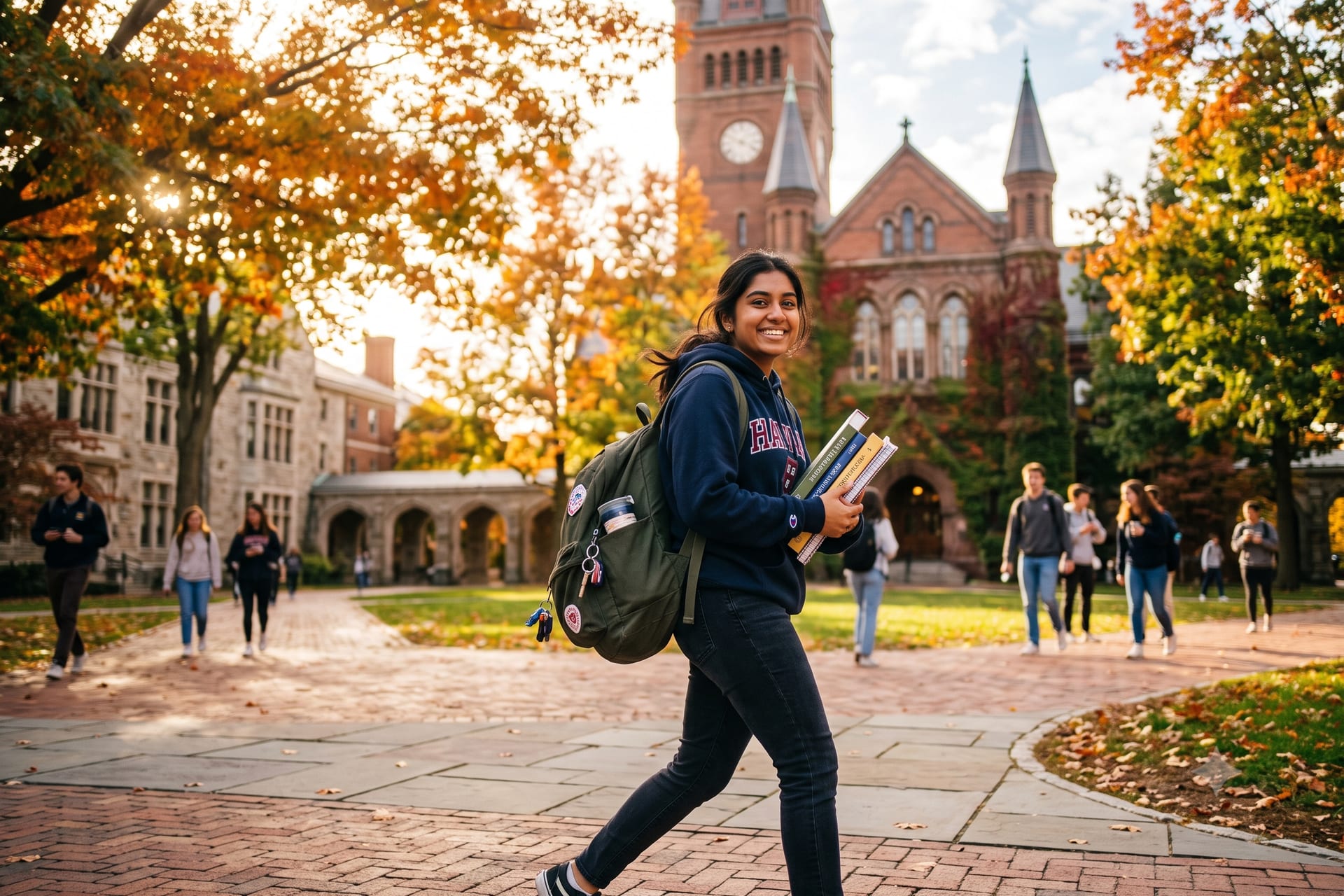

Quick Answer to Study in USA for Indian Students 2026: Complete Guide
Indian students heading to the USA in 2026 need admission to an SEVP-approved institution, an I-20, a paid SEVIS fee and a successful F1 interview. Universities typically require IELTS 6.5-7.0, with higher expectations for scholarships, and some programmes ask for GRE or GMAT. Proof of funds must cover the first year's tuition plus living costs as stated on the I-20. Book the interview as early as slots permit. Global Colliance has trained more than 15,000 students for IELTS and PTE, and sets each band target against the universities a student is actually applying to.
The United States remains the single most popular destination for Indian students, and for good reason. To study in USA for Indian students means access to world-leading universities, cutting-edge research, strong career outcomes and a genuinely global experience. This complete 2026 guide brings together everything you need, from choosing universities and courses to understanding costs, the F-1 visa and post-study work, based on our years of guiding students to American campuses.
Why Study in USA for Indian Students
The USA hosts more of the world's top-ranked universities than any other country, and its degrees carry weight with employers everywhere. Indian students are drawn by the flexibility of the American education system, the strength of STEM and business programs, generous research funding and the chance to work through Optional Practical Training after graduation.
Beyond academics, studying in the USA builds independence, cross-cultural communication and a professional network that can shape your entire career. It is an investment in both a qualification and a mindset.
Top Universities and Courses to Study in USA
American universities span the Ivy League, large public research universities and specialised institutes. Popular choices for Indian students include programs in Computer Science, Data Science, Business Analytics, Engineering, Management and Health Sciences. The right university depends on your academic profile, budget and career goals rather than rankings alone.
When shortlisting, look at course curriculum, research opportunities, location, tuition, scholarship availability and graduate employment outcomes. A strong fit between your profile and the program matters more than chasing a famous name.
Cost to Study in USA for Indian Students
Costs vary widely. Annual tuition typically ranges from USD 20,000 to USD 55,000 depending on whether you choose a public or private university and the level of study. Living expenses add roughly USD 12,000 to USD 20,000 per year, with cities like New York and San Francisco at the higher end.
Scholarships, assistantships and education loans all help manage these costs. Many Indian students fund part of their studies through merit scholarships and, at postgraduate level, through teaching or research assistantships.
The F-1 Visa to Study in USA
The F-1 visa is the standard student visa for full-time study. The process involves receiving your Form I-20 from an approved school, paying the SEVIS fee, completing the DS-160 form and attending a visa interview at the US Embassy or Consulate. Financial proof and a clear study plan are central to approval.
You can review official visa guidance on the US Department of State student visa page, which is the authoritative source for requirements and procedures.
Scholarships and Funding to Study in USA
Funding your American education is very achievable with planning. Options include university merit scholarships, need-based aid for some institutions, external scholarships such as Fulbright, and graduate assistantships that offer tuition waivers plus a stipend. Education loans from Indian banks and international lenders round out most students' funding plans.
Applying early and presenting a strong academic and extracurricular profile improves your chances of meaningful funding.
Career Prospects After You Study in USA
After graduation, F-1 students can apply for Optional Practical Training, which allows up to 12 months of work, extended to 36 months total for eligible STEM graduates. This is a major reason Indian students choose the USA, since it provides real professional experience and a pathway to longer-term opportunities.
To turn all of this into a clear plan, our experienced USA student visa consultants guide you through university selection, applications, funding and the F-1 visa. You can also explore our full services on the Global Colliance homepage. With the right strategy, studying in the USA becomes an achievable, well-planned goal.
Intakes and Timelines to Study in USA
American universities primarily offer Fall and Spring intakes, with Fall, beginning in August or September, being the largest and most popular. Fall offers the widest choice of programs, the most funding opportunities and the best availability of on-campus roles and assistantships. Spring, starting in January, is a strong secondary option, especially for students who need extra time to prepare their applications, tests or finances.
Because top programs are competitive, planning your timeline early is essential. A well-organised application usually begins a year or more before the intake, allowing time for standardised tests, university applications, funding arrangements and the F-1 visa process. Starting early not only reduces stress but also improves your chances of admission and scholarships, since many awards favour early applicants.
Standardised Tests to Study in USA
Most American programs require standardised tests in addition to English proficiency. Undergraduate applicants often need the SAT, while graduate applicants may need the GRE or, for business programs, the GMAT. Alongside these, you will typically submit IELTS, TOEFL or PTE scores to prove English proficiency. Some universities have made certain tests optional, so always check the specific requirements of each program on your shortlist.
Strong test scores strengthen both your admission chances and your scholarship prospects. Preparing systematically, giving yourself enough time to retake a test if needed, and targeting the scores your chosen universities expect are all part of a well-planned application. Building test preparation into your timeline from the start prevents last-minute pressure.
Student Life When You Study in USA
Studying in the USA is about far more than academics. American campuses are known for their vibrant student life, diverse communities, extensive clubs and societies, and strong career services. As an international student, you will build a global network, take part in research and internships, and develop the independence and communication skills that employers value everywhere.
Practical preparation makes this experience smoother. Arranging accommodation early, understanding health insurance requirements, budgeting for your city, and connecting with the Indian student community before you arrive all help you settle in quickly. The sooner you feel at home, the sooner you can focus fully on your studies and the opportunities around you, which is ultimately what makes the American experience so rewarding.
STEM Opportunities When You Study in USA
A major reason Indian students choose to study in USA is the exceptional strength of its science, technology, engineering and mathematics programs. American universities lead the world in research funding, laboratory facilities and industry partnerships, particularly in fields like Computer Science, Data Science, Artificial Intelligence, Engineering and Biotechnology. For students aiming at cutting-edge careers, this depth of resources is difficult to match anywhere else.
The STEM advantage extends well beyond the classroom. Graduates of designated STEM programs are eligible for an extended period of Optional Practical Training, allowing up to three years of work experience in total after graduation. This extra time is invaluable for building a career, gaining industry exposure and establishing professional networks in some of the world's leading technology and research hubs. It is one of the clearest practical benefits of an American STEM education.
To make the most of these opportunities, it helps to plan your program choice with your career in mind from the outset. Selecting a STEM-designated course, engaging in research and internships during your studies, and building relationships with faculty and industry all strengthen your outcomes. With the right strategy, studying a STEM subject in the USA becomes not just an academic achievement but a powerful launchpad into a global career, which is exactly why it remains such a popular choice among ambitious Indian students.
Planning Your Application to Study in USA
Turning the ambition to study in USA into a successful application comes down to early, organised planning. Because top programs are competitive and the F-1 process has several stages, students who begin a year or more in advance consistently achieve the best outcomes. This runway allows time to prepare for standardised tests, research and shortlist universities, arrange funding, and complete the visa process without pressure.
A well-structured plan also improves your chances of admission and scholarships, since many awards favour early, complete applications. Mapping your timeline backwards from your intended intake, and tackling each stage in sequence, keeps you calm and in control throughout. With careful planning, expert guidance and a strong, consistent application, the goal of studying in the USA moves firmly within reach, opening the door to a world-class education and a genuinely global career.
Working to a tight budget? Our guide to the cheapest universities in the usa explains sticker price versus cost of attendance and lists lower-cost institutions with verified fees.
FAQs About Study in USA for Indian Students
How much does it cost to study in USA for Indian students in 2026?
Annual tuition typically ranges from USD 20,000 to USD 55,000, plus USD 12,000 to USD 20,000 for living expenses. Scholarships, assistantships and loans help manage these costs.
Which visa do Indian students need to study in USA?
Most full-time students need an F-1 visa, which requires a Form I-20 from an approved school, the SEVIS fee, the DS-160 form and a visa interview.
Which courses are best to study in USA for Indian students?
Computer Science, Data Science, Business Analytics, Engineering, Management and Health Sciences are consistently popular, but the best course depends on your profile and career goals.
Can Indian students work after they study in USA?
Yes. F-1 students can apply for Optional Practical Training, up to 12 months for most graduates and up to 36 months total for eligible STEM graduates.
Are scholarships available to study in USA for Indian students?
Yes. Options include university merit scholarships, external scholarships like Fulbright, and graduate assistantships that offer tuition waivers plus a stipend.