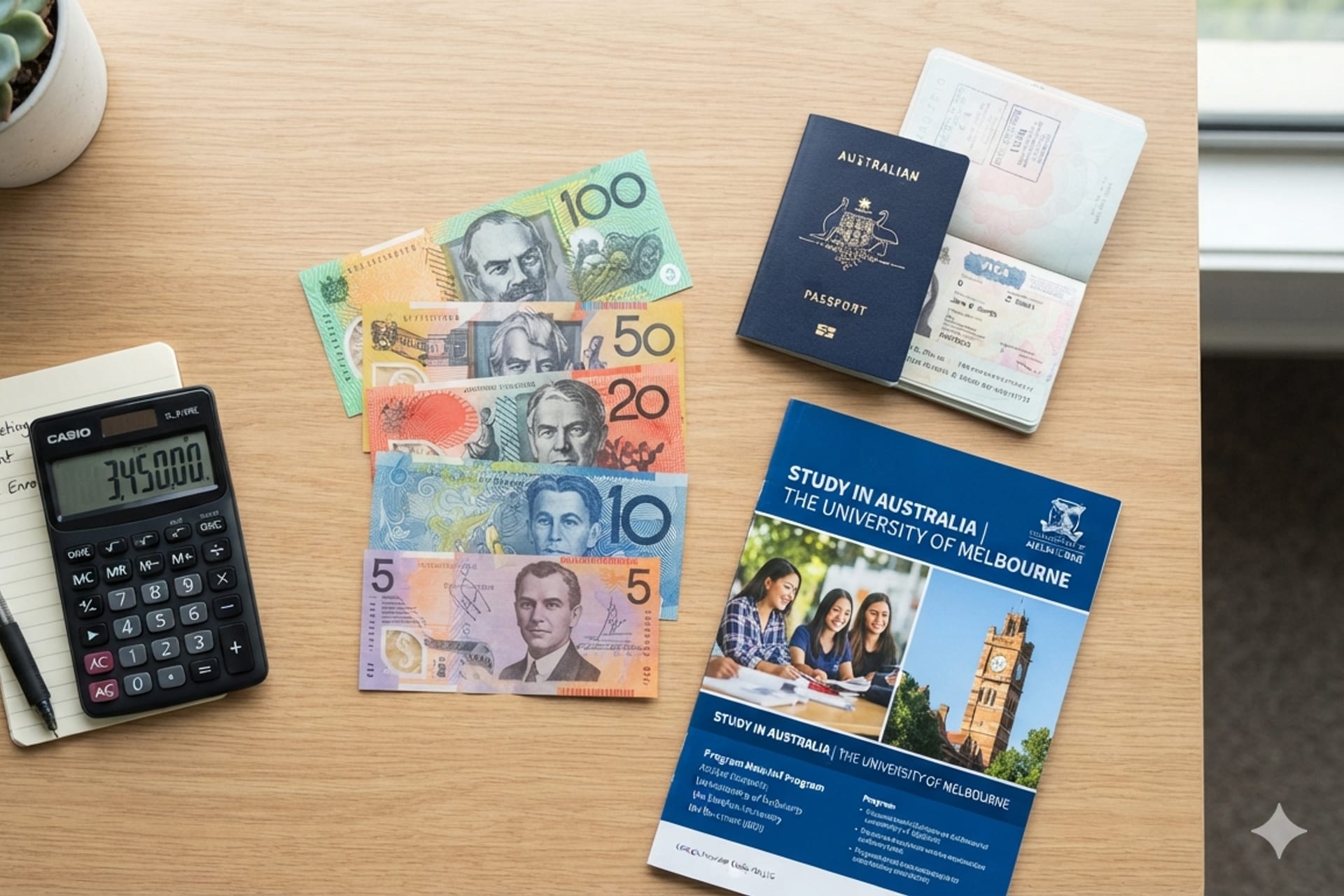

Quick Answer to Cost of Studying in Australia for Indian Students
Studying in Australia combines tuition, living costs, Overseas Student Health Cover and the visa fee. Tuition varies widely by institution and course, and living costs differ sharply between Sydney or Melbourne and smaller cities. Your visa application must evidence funds covering tuition, living expenses and travel, so budget on the full first-year figure rather than tuition alone. Global Colliance helps students compare total cost across destinations and build the financial evidence each visa route requires.
Understanding the full financial picture before you apply is one of the smartest steps you can take toward studying in Australia. The cost of studying in Australia includes tuition, living expenses, health cover and visa fees, and knowing each item helps you budget accurately and avoid surprises. This transparent guide breaks down every cost for Indian students and offers practical ways to plan and save, based on our experience guiding students to Australian universities.
What Makes Up the Cost of Studying in Australia
The cost of studying in Australia has several parts: tuition fees, living expenses, Overseas Student Health Cover, the student visa fee and initial travel and setup costs. Seeing these items separately helps you build a realistic budget rather than focusing only on the headline tuition figure.
It also helps to distinguish one-time costs, such as the visa fee and airfare, from recurring costs like rent, food and transport. This distinction makes it easier for families to understand both the upfront outlay and the ongoing monthly commitment involved.
Understanding the full picture early allows you to plan effectively and identify where you can save. A clear, itemised budget is also one of the strongest elements of your visa application, since it demonstrates genuine financial capacity.
Families often focus on tuition alone, but the fuller picture, including living costs, insurance and setup expenses, gives a much more accurate sense of the real commitment. Building this complete view from the outset prevents unwelcome surprises and makes it far easier to plan and approve the investment with confidence.
Tuition Fees in the Cost of Studying in Australia
Tuition is usually the largest part of the cost of studying in Australia. For international students, undergraduate and postgraduate degrees typically range from around AUD 20,000 to AUD 45,000 per year, depending on the university, course and level of study.
Fields such as medicine, engineering and business at leading universities sit at the higher end, while many quality programmes fall in the mid-range. Choosing a course and institution that balance reputation with affordability is an important early decision.
You can explore official cost and course information on the official Study Australia website, which is the authoritative source. Comparing tuition across suitable institutions, rather than assuming all are similar, can lead to significant savings without compromising on quality.
The choice of city can change your total cost significantly over a multi-year course, sometimes by thousands of dollars a year. Because a quality education is available in more affordable cities as well as the largest ones, we encourage students to weigh location against budget rather than defaulting to the best-known destinations.
Living Costs in the Cost of Studying in Australia
Living costs are the second major part of your budget. The Australian government sets a living cost benchmark of AUD 29,710 for a year for visa purposes, which reflects a realistic estimate covering accommodation, food, transport and personal expenses.
Your actual living costs depend heavily on your city and lifestyle. Sydney and Melbourne are the most expensive, while cities like Adelaide, Brisbane and Perth can be more affordable. Sharing accommodation and cooking at home are common ways students reduce their monthly spending.
Planning your living costs around your chosen city is essential. Building a realistic monthly budget, and choosing a location that suits your finances, helps ensure the overall cost of studying in Australia remains manageable throughout your course.
Australia's relatively high minimum wage means part-time work can meaningfully offset living costs, provided it never comes at the expense of your studies. Used sensibly, the right to work up to forty-eight hours a fortnight turns into both financial support and valuable local experience that strengthens your later career prospects.
Health Cover and Visa Costs
Overseas Student Health Cover is a mandatory part of the cost of studying in Australia, required for the full duration of your stay. OSHC is relatively affordable and covers much of your medical care, giving you peace of mind while you study.
The student visa itself carries a fee payable when you lodge your subclass 500 application, along with smaller costs for biometrics and any required medical examinations. These are one-time costs, but they should be included in your overall budget.
Accounting for OSHC and visa costs alongside tuition and living expenses gives you a complete financial picture. Listing every item in advance ensures no required cost is overlooked or causes a delay in your application.
Scholarships remain one of the most underused levers for reducing the cost of an Australian degree. Because many awards are less competitive than students assume, applying early and to a well-chosen mix of university and government schemes can produce genuine, lasting savings across the length of your programme.
Work Rights That Offset the Cost of Studying in Australia
A significant advantage of studying in Australia is the right to work part-time, currently up to 48 hours per fortnight during study periods and unrestricted hours during scheduled breaks. This helps many students offset a meaningful share of their living costs.
Common part-time roles include hospitality, retail, tutoring and campus jobs, and Australia's minimum wage is relatively high. While work should never compromise your studies, it provides both financial support and valuable local experience.
After graduating, the Temporary Graduate visa allows eligible students to work in Australia for a period, offering the chance to gain professional experience and further offset the overall cost of their education.
Viewed over the full length of a degree, small, consistent savings on rent, food, transport and scholarships compound into a meaningful reduction in your total outlay. Approaching the cost of studying in Australia as an ongoing plan to manage, rather than a single number to fear, is what keeps the whole experience genuinely affordable and sustainable.
Scholarships and Ways to Reduce the Cost
Many Australian universities and the government offer scholarships that can significantly reduce the cost of studying in Australia. These range from partial tuition reductions to substantial merit-based awards, and applying early to a mix of them improves your chances.
Beyond scholarships, you can reduce costs by choosing a more affordable city, sharing accommodation, budgeting carefully and making full use of your work rights. Small, consistent savings across these areas add up meaningfully over a multi-year course.
Treating scholarships and cost-saving strategies as part of your planning from the start, rather than an afterthought, makes an Australian education more affordable than many students expect.
How Global Colliance Helps With the Cost of Studying in Australia
Planning your budget, targeting scholarships and arranging your finances correctly is exactly where guidance helps. Our Australia student visa consultants help you compare costs across institutions, identify scholarships, plan your budget and prepare a strong, well-documented financial file for your visa.
You can also explore our full range of services on the Global Colliance homepage. With clear budgeting and expert support, the cost of studying in Australia becomes predictable and manageable, letting you focus on your studies rather than financial stress.
Because we guide many students to Australia, we know where genuine savings can be found and how to present finances convincingly for the visa. That experience helps you plan an affordable, well-structured path to your Australian education.
Budgeting Well for the Cost of Studying in Australia
Start by listing every item: tuition, living costs, OSHC, visa fees, travel and initial setup. Arrange your funds early so they show stability for the visa, and keep a buffer for the first few weeks, including accommodation deposits and setup expenses.
Building this budget several months in advance prevents rushed borrowing and gives your finances the stability visa officers look for. A clear, itemised plan is both a practical tool and a strong element of your application.
When you weigh the overall cost against the quality of Australian education, strong work rights and post-study opportunities, Australia offers genuine value. Careful budgeting ensures you can make the most of that opportunity with confidence.
To see how these costs translate into the money you must show for your visa, with a worked example, read our guide to the Australia student visa financial requirements.
To cut your tuition bill, see which awards are open in 2027 and what they are worth in our guide to Australia scholarships for Indian students.
To see how costs, work hours and graduate visas stack up, read our Australia vs New Zealand for study comparison.
FAQs About the Cost of Studying in Australia
What is the cost of studying in Australia for Indian students?
Tuition typically ranges from AUD 20,000 to AUD 45,000 per year, plus living costs benchmarked at AUD 29,710 annually, along with health cover, visa fees and travel.
How much are living costs in Australia for students?
The government sets a living cost benchmark of AUD 29,710 for a year, though actual costs vary by city, with Sydney and Melbourne more expensive than Adelaide, Brisbane or Perth.
Can Indian students work to offset the cost of studying in Australia?
Yes. Students can work up to 48 hours per fortnight during study periods and unrestricted hours during scheduled breaks, helping to offset living costs.
Are there scholarships to reduce the cost of studying in Australia?
Yes. Many universities and the government offer scholarships, from partial tuition reductions to substantial merit-based awards, so apply early to a mix of them.
Is studying in Australia worth the cost?
For many students, yes. High-quality education, strong work rights and post-study opportunities through the Temporary Graduate visa make Australia a valuable investment.